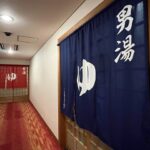
We’ll start by driving along mountain roads from Hakone to Shuzenji.
I chose Hakone as the starting point for a trip covering roughly half of the Izu Peninsula.
The route takes me along the Hakone Turnpike toward Shuzenji.
The driving course looks like this: I’ll head down from the center of the Izu Peninsula to Kawazu and Shimoda, then drive along the West Izu coast as I make my way toward Numazu.
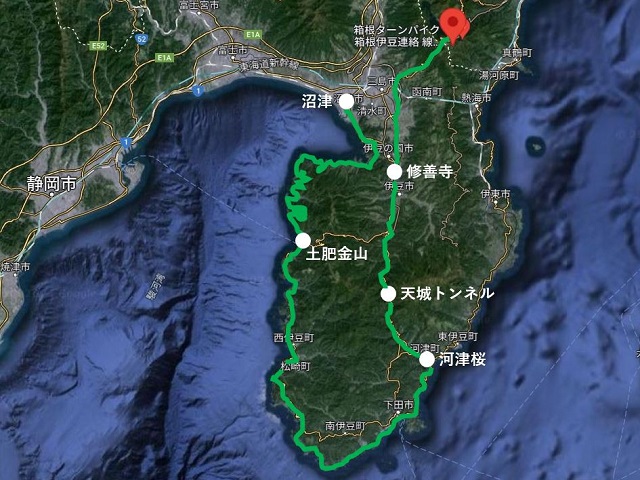
Google Mapより
Driving through the fog on the Hakone Turnpike.
The Hakone Turnpike is a toll road.
I paid the fee in cash at the toll gate and set off onto the Hakone Turnpike in high spirits.
I drove along, taking photos of the Hakone scenery from parking areas along the way, but unfortunately, it was raining.
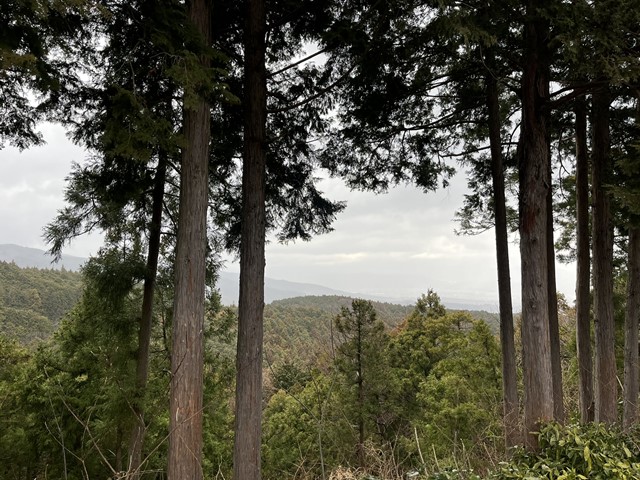
At first, I was driving along a road with snow remaining on the shoulder, amidst rainy weather.
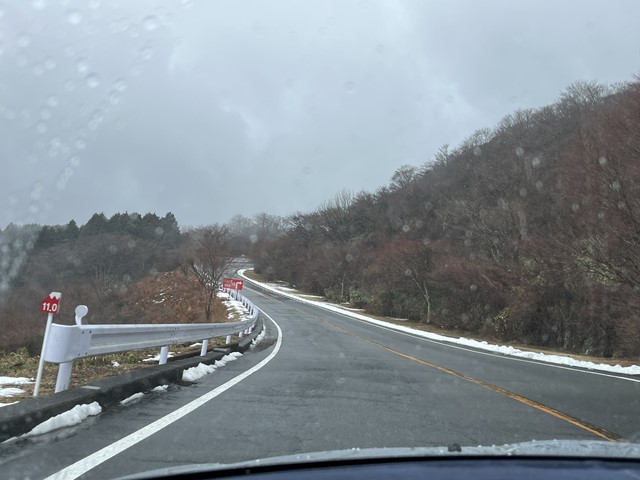
The fog grew thicker as the elevation gradually increased.
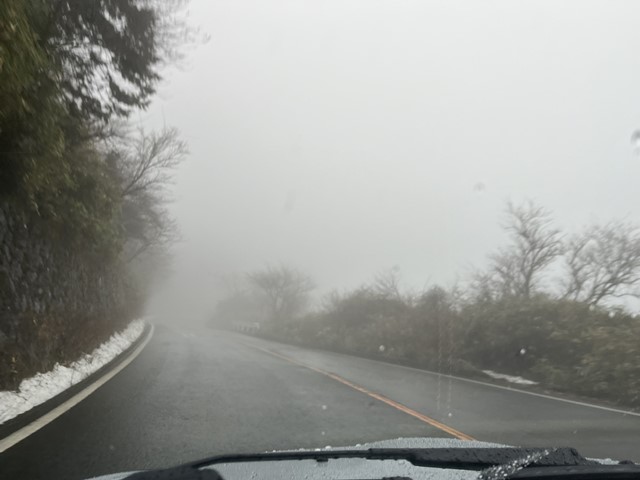
The traffic was quite light, making for a stress-free drive; however, by the time I reached the rest stop near the summit, I was met with a combination of rain, strong winds, and fog. Since conditions made it impossible to even step outside, I decided to head back down the pass without delay.
I imagine that on a clear day, this would be a truly delightful driving route, offering views of Mount Fuji.
Heading south through the center of the Izu Peninsula toward Shuzenji.
After crossing the mountain pass from the Hakone Turnpike, I found several new roads leading to Shuzenji, allowing me to arrive there in about an hour.
I checked into my hotel for an overnight stay in Shuzenji and then set out to explore the surrounding area.
関連記事:湯めぐりの宿 修善寺温泉 「桂川」に宿泊
When it comes to sightseeing in Shuzenji, the riverside promenade and the bamboo grove in the area are famous.
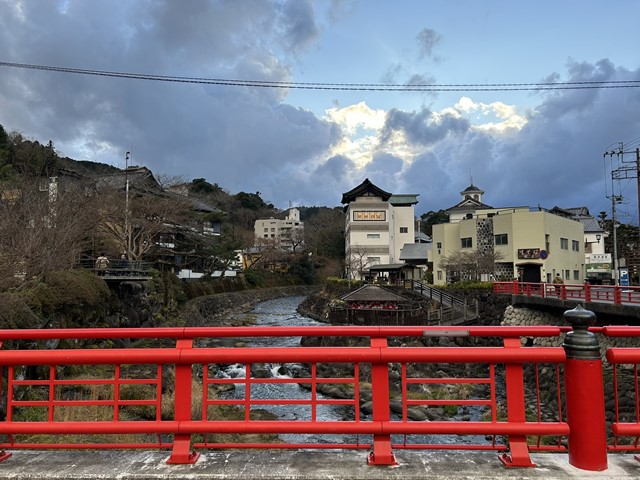
There are five bridges in Shuzenji, and it is said that each one offers a different kind of blessing.
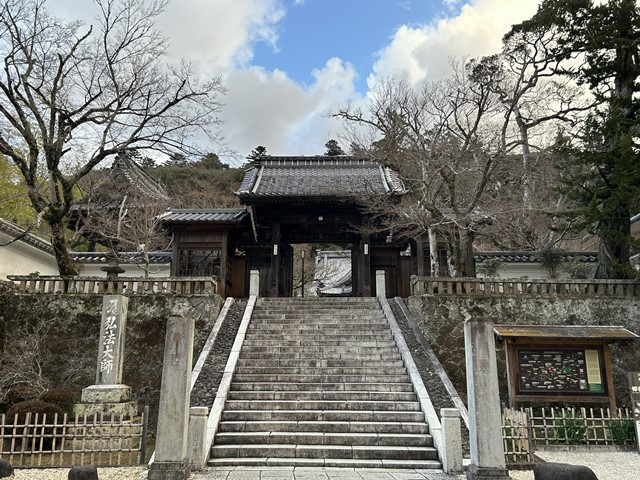
Shuzenji is also quite uncrowded, making it easy to visit and pray.

The river visible from the walking path is also beautifully maintained.
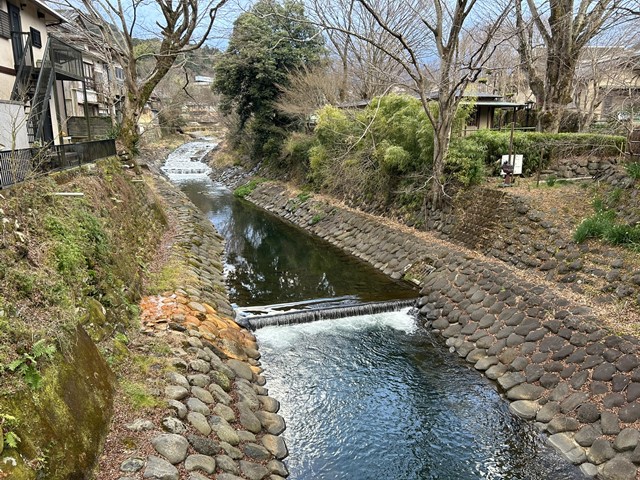
The vermilion bridges that come into view here and there along the walking path are truly beautiful.
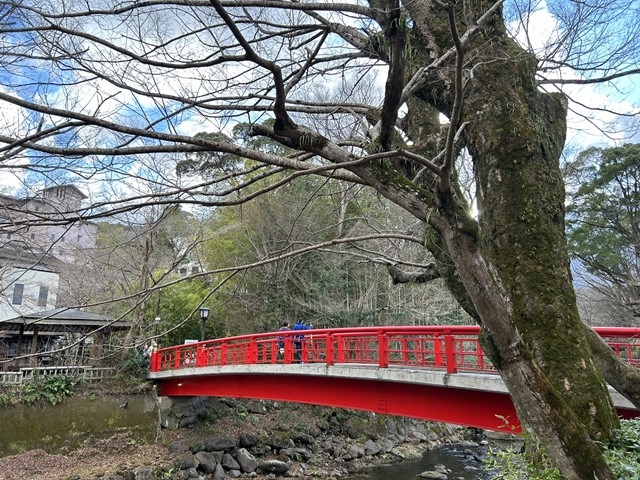
平日だったせいか、日本人の観光客よりも海外からの観光客の方が多いように感じました。
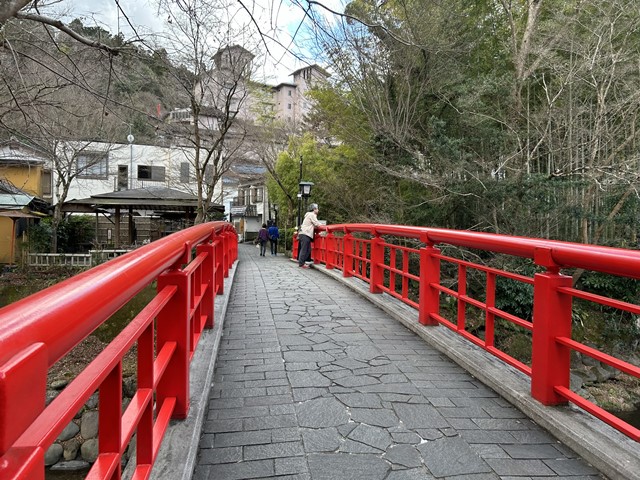
The bamboo grove area is also well-maintained and offers a wonderful view.
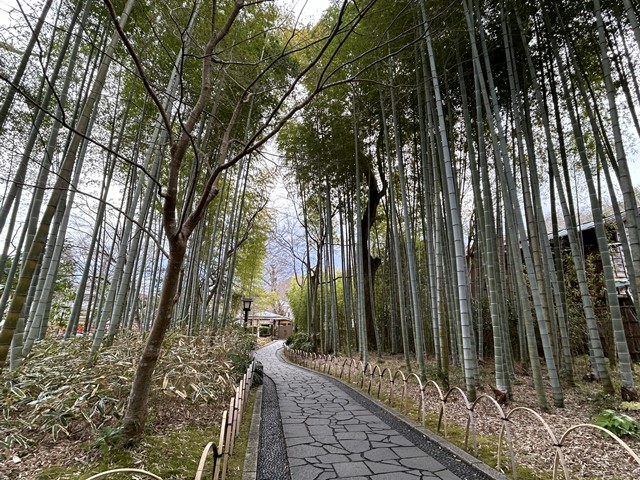
There is a large bench in the center of the bamboo grove area—it’s definitely a photo spot that everyone captures.
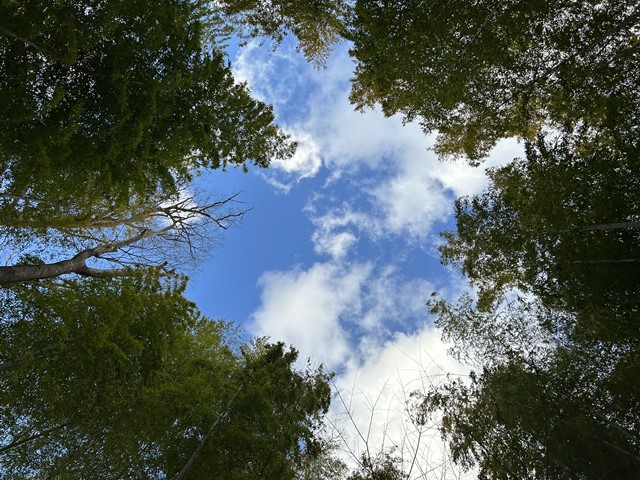
True to its reputation as a hot spring destination, the Shuzenji area boasts three free footbaths.
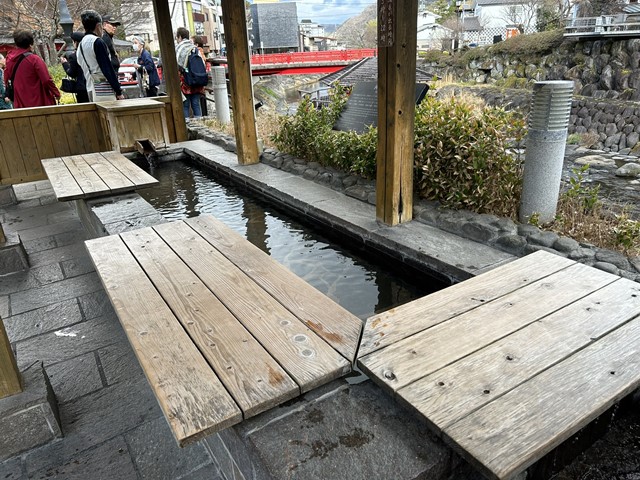
This might be the most famous footbath of all.
It was always popular because you could go right down to the riverside—with a view of Shuzenji—and soak your feet.
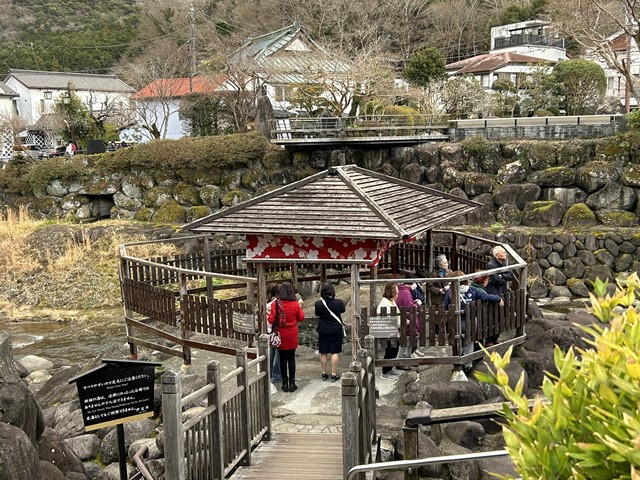
There was also a footbath on the opposite bank, and since it was unoccupied, we decided to use that one.
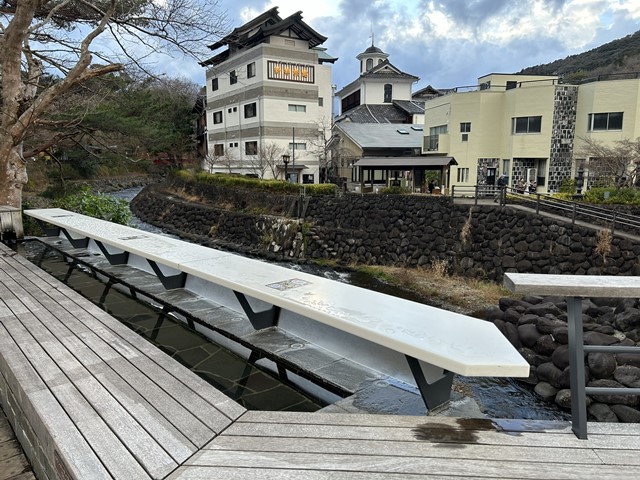
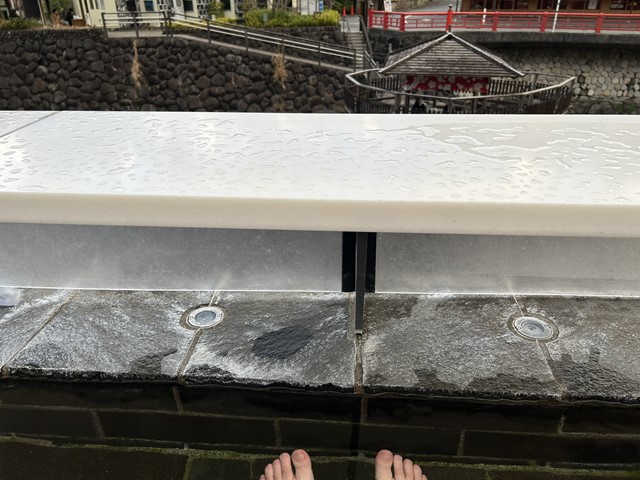
The water temperature felt pleasantly warm—just mildly so.
It might be necessary to take measures against the wind for the Kawazu cherry trees.
The day after staying in Shuzenji, I headed south down the Izu Peninsula to see the Kawazu cherry blossoms.
Since the drive from Shuzenji to the Kawazu cherry blossom area takes about an hour, I checked out of the hotel early.
On the way from Shuzenji to Kawazu, the route takes you across the Amagi Pass—famous as the subject of the *enka* song “Amagi-goe.”
Nowadays, the route involves passing through the Amagi Tunnel, but there are actually two: the new Amagi Tunnel and the Old Amagi Tunnel.
I initially thought about taking the old road to reach the Old Amagi Tunnel on my way to Kawazu, but I gave up because the road conditions were so poor.
It seems like it would be better to approach the Old Amagi Tunnel from the Kawazu side.
Anyway, before I knew it, I had arrived in Kawazu.
I managed to snag a parking spot at the “Kawazu Cherry Blossom Parking Lot” located at the community center—just barely making it in time.
This appeared to be the closest parking lot, and it was already full by shortly after 10:00 AM.
The parking fee was 1,000 yen per vehicle; that seemed to be the standard rate in the area.
You pay the fee at the entrance and park your car in the gravel lot.
Along the river, Kawazu cherry trees were blooming with beautiful pink flowers.
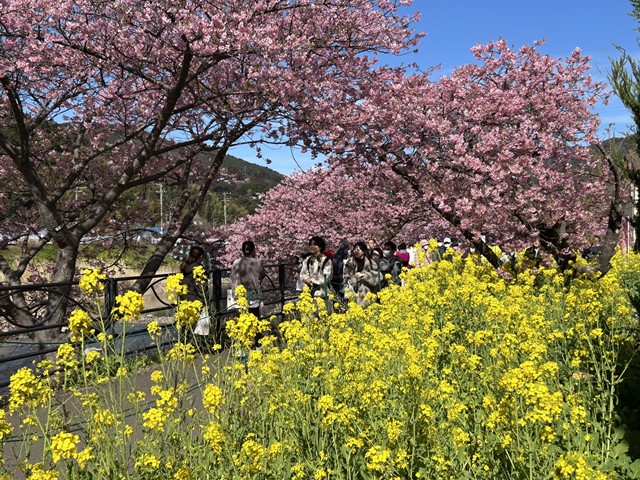
We’ve had a stretch of warm days recently, so I was worried the cherry blossoms might fall; however, the Kawazu Cherry Blossom Festival runs through the end of February, suggesting that—unlike the Somei Yoshino variety—these blossoms last for a long time.
There is also an area along the river known as “Rapeseed Blossom Road”; while the path is a bit narrow and tricky to walk on, you can enjoy the beautiful contrast between the yellow rapeseed blossoms and the cherry blossoms.
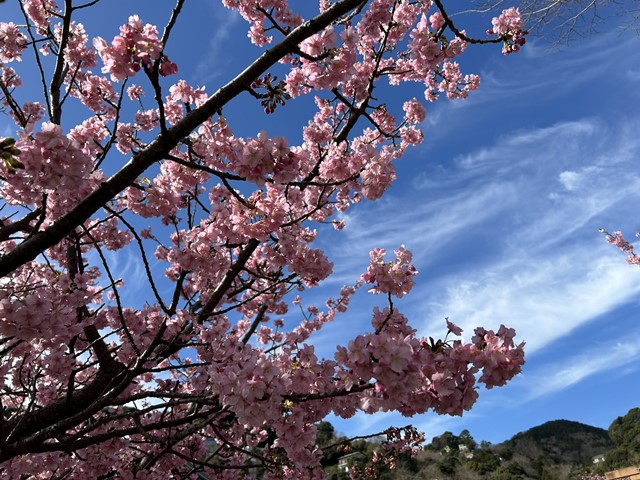
It was actually quite a windy day, yet the flowers are still blooming magnificently.
If you walk toward the sea—in the opposite direction from the Nanohana Road—you will come to a bridge with a striking red color.
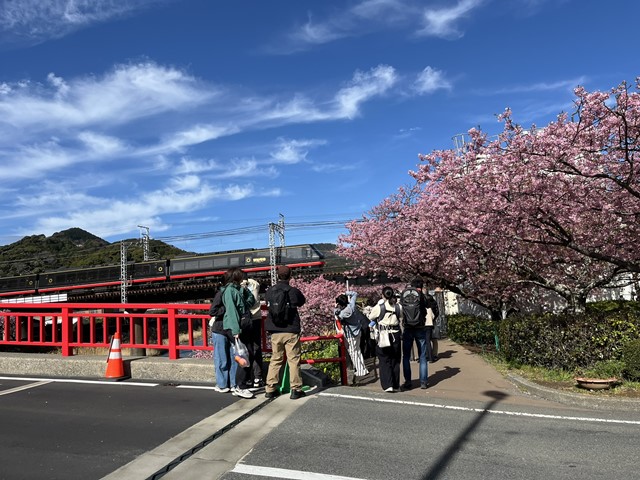
I managed to capture a photo of the “Black Ship” train and the Kawazu cherry blossoms at just the right moment.
This “Black Ship” train operates on the JR Ito Line and Izukyu Line connecting Shimoda and Atami. It is a resort train—notably rare nationwide for its black livery—designed to evoke the image of Commodore Perry’s “Black Ships.” It began service in 2004 to commemorate the 150th anniversary of the opening of the port of Shimoda.
The train offers plenty of onboard events, such as a ceiling that transforms into a planetarium while the train is in motion. What makes it a great deal is that you can ride the route between Shimoda and Atami for the price of a standard fare ticket (though a reserved-seat ticket for the limited express service may be required depending on the season).
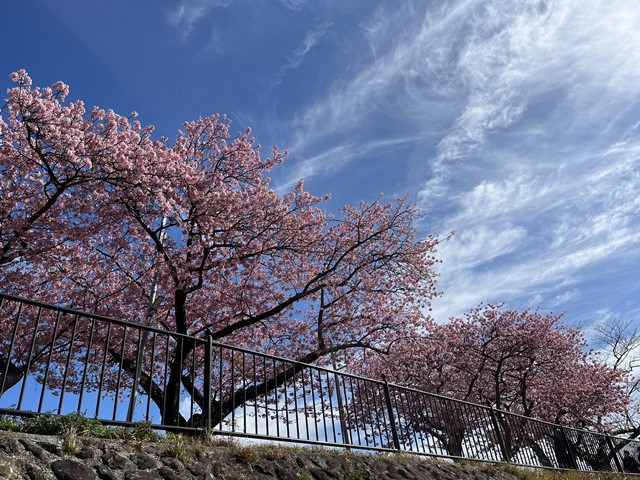
If you head toward the water, you’ll come to a spot where you can look up at the Kawazu cherry blossoms from the same level as the riverbank.
I spotted a few tourists enjoying food they had bought from the stalls along the water’s edge.
The walkway on this side was wider and less crowded, making it easier to walk.
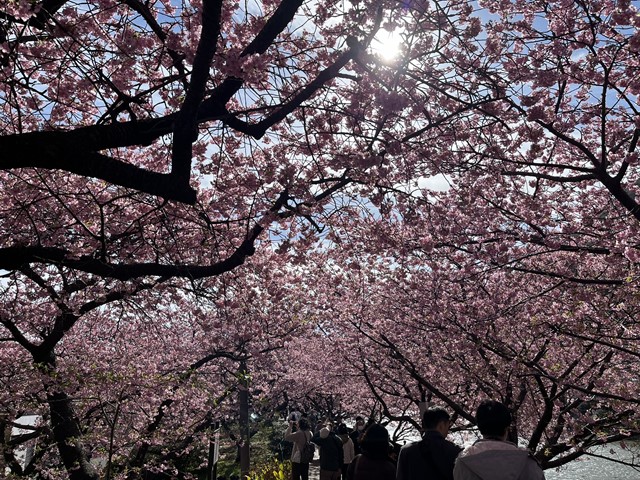
The cherry trees on this side are a bit taller, so you can enjoy the feeling of passing right through a tunnel of blossoms.
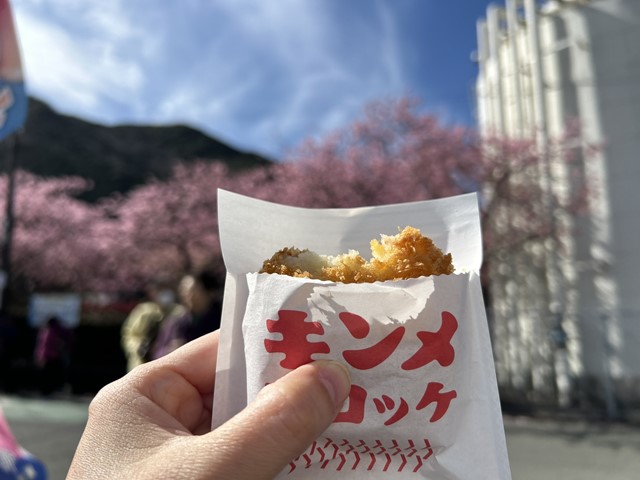
Feeling a bit peckish, I bought something called a “Kinme croquette.”
It cost 300 yen.
There were tables and chairs right next to the stall, so I munched on the croquette while gazing at the cherry blossoms.
To Irozaki Lighthouse
After fully enjoying the Kawazu cherry blossoms, instead of simply heading back the way I came, I decided to travel further south toward the Irozaki Lighthouse.
On the way, I came across a stunning spot known as Shirahama Beach; I took a brief stroll there after stopping at a 7-Eleven.
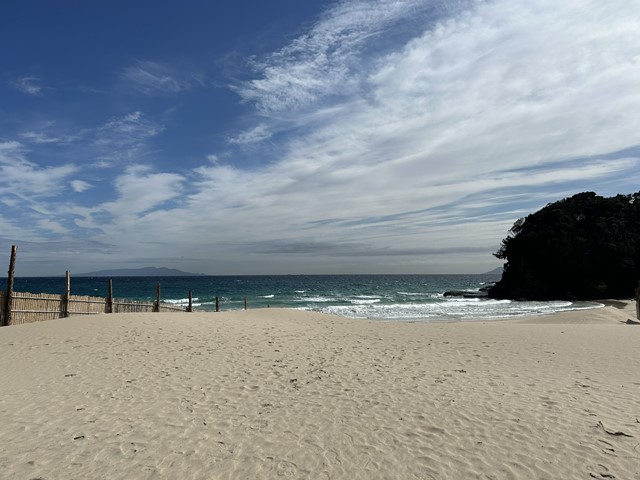
セブンイレブン下田白浜店近くの海岸
It took about an hour by car to reach Irozaki Lighthouse from the Kawazu cherry blossom walking area.
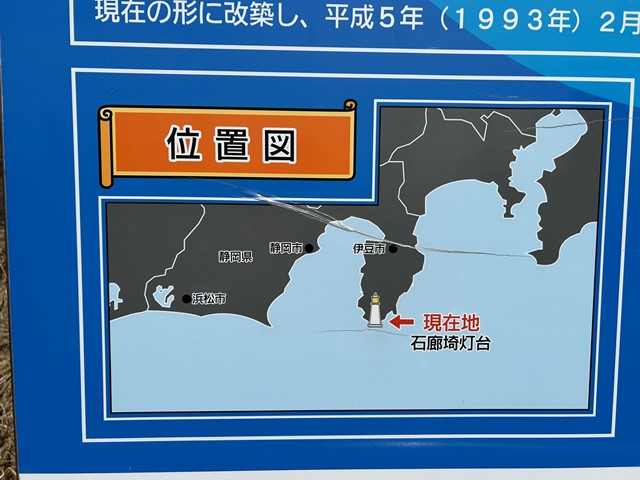
It is a designated Geopark; you pay the fee at the parking lot entrance to park.
Since there is a shrine located beyond the lighthouse, you pass through a torii gate on your way there.
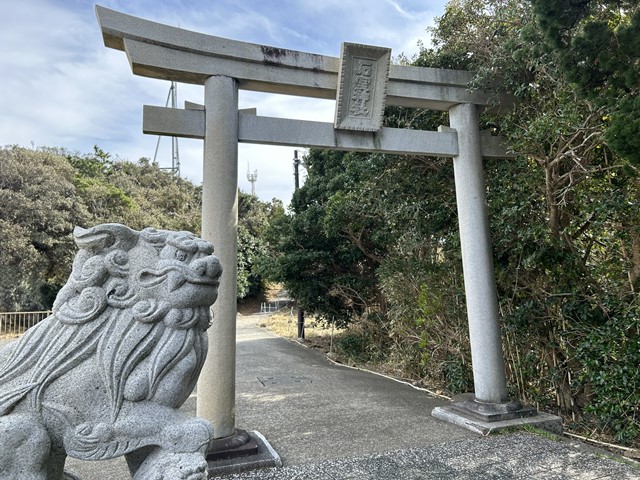
I hear it’s a five-minute walk to the lighthouse and a ten-minute walk to the shrine.
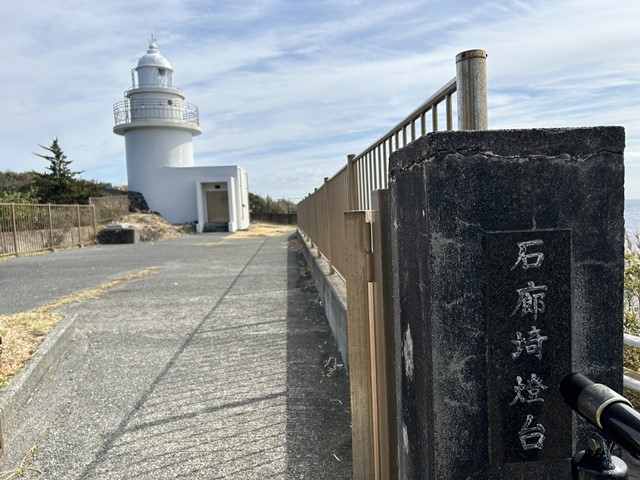
You can walk all the way around the lighthouse to view the structure itself and take in the scenery from it.
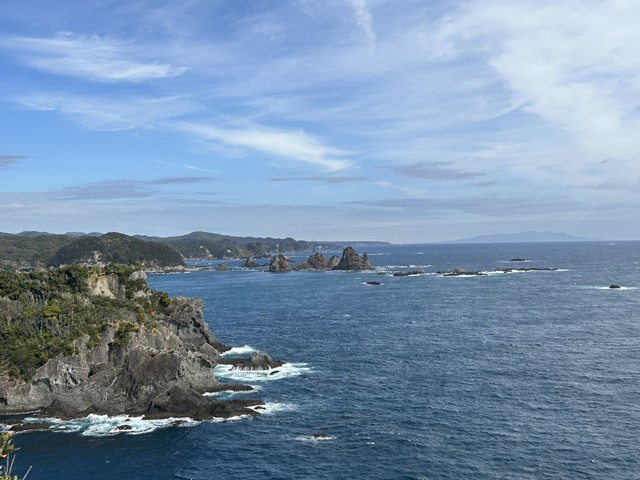
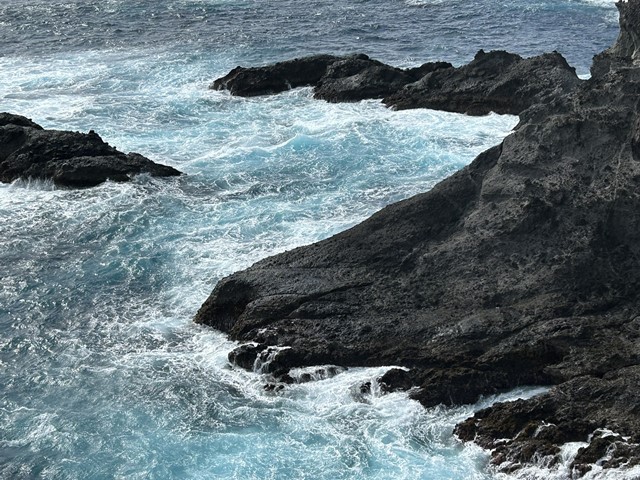
The wind was incredibly strong that day, sending up massive sprays of sea spray.
If you continue along the path past the lighthouse, a shrine and a sacred rock come into view, situated on a sheer cliff.
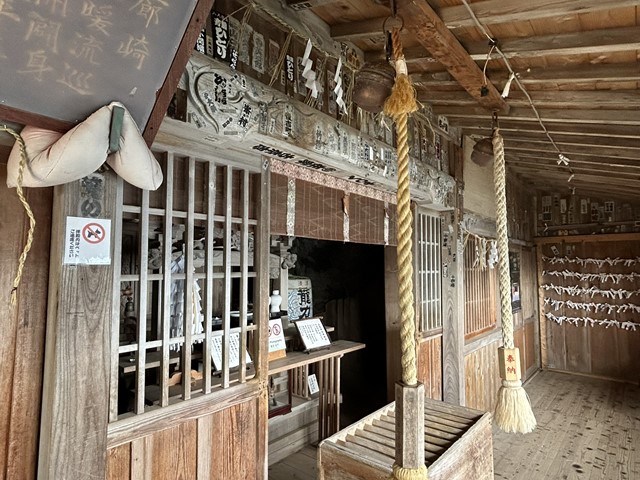
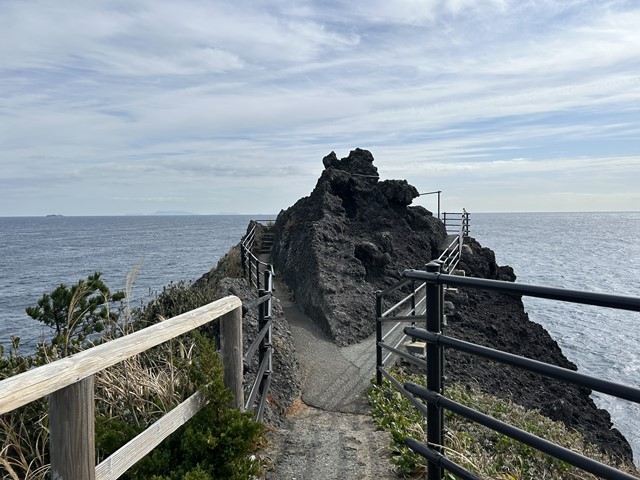
Descending the narrow staircase in such strong winds requires a good deal of courage, but it offers a view of a magnificent, rugged natural landscape.
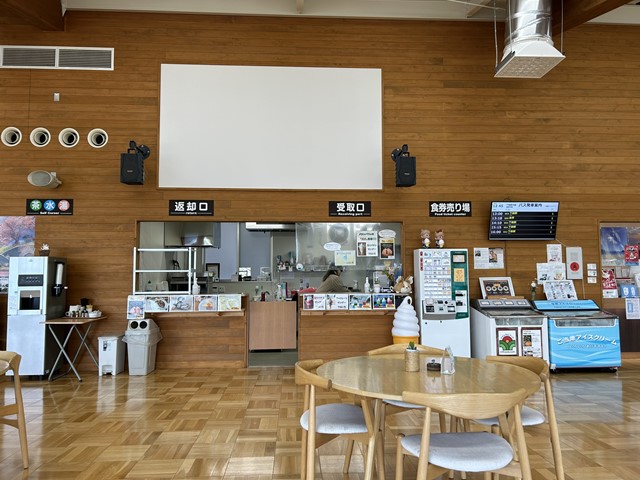
For lunch, I had the “Geo-Nori” set meal at the rest pavilion within the Geopark.
There was a place within the geopark where I could get a light meal, so I decided to eat there.
While the grilled fish set meal and curry bread seemed to be popular choices, I decided to order the “Geo-Nori Set Meal” (or something to that effect)—a dish featuring a generous serving of *iso-nori* (rock seaweed).
I believe it cost either 400 or 450 yen, but it arrived with a massive heap of seaweed.
It offered incredible value for money.
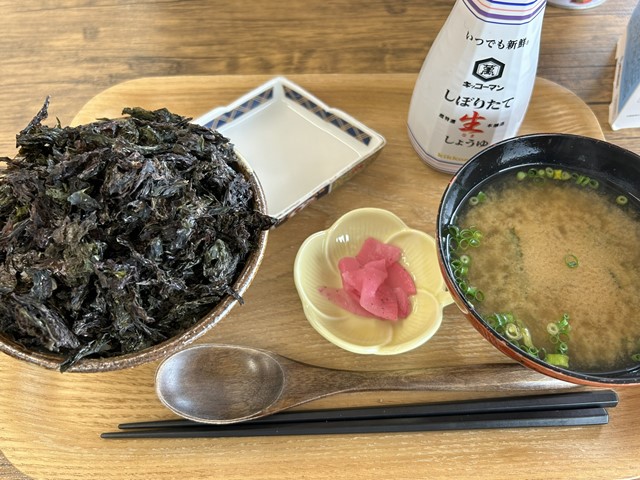
You eat it by adding soy sauce and wasabi, but the flavor of the seaweed really stands out; it was a truly unique and delicious set meal.
It appears there is a bus running from Irozaki Lighthouse to Shimoda Station, so you can visit using public transportation.
Ishibu Rice Terrace Observation Deck
About a 30-minute drive from Irozaki Lighthouse, I saw a sign for the “Ishibu Rice Terraces,” so I decided to stop by.
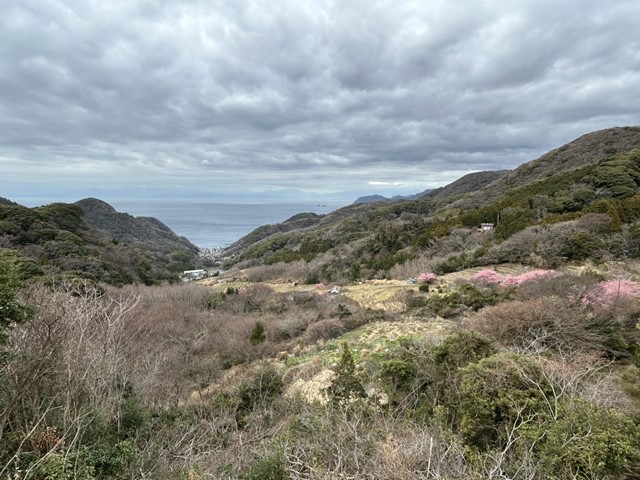
Since it is not the rice-growing season, the terraced rice fields do not stand out as much, but they extend quite far down the slope.
There is a parking lot with a small observation deck, so I recommend parking there to take in the view.
In West Izu, you can view Mount Fuji from the sea.
I drove along the coast of West Izu on Route 136.
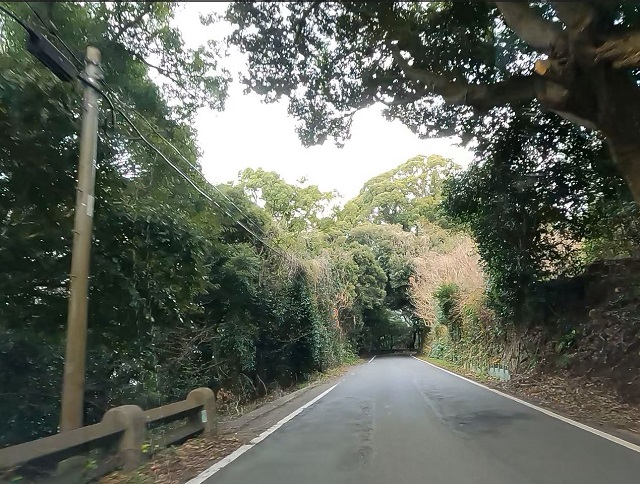
I followed the winding coastal road.
It was great that there wasn’t much traffic.
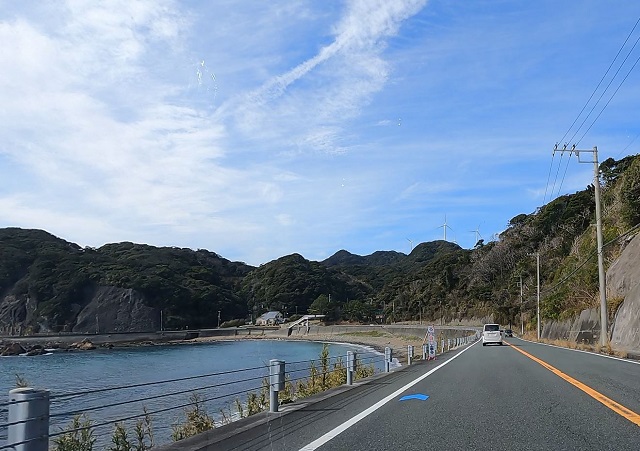
While heading inland via Toi Gold Mine would have been more convenient, I deliberately chose to continue along the coastal road instead.
The route features stretches of narrow roads and sequences of hairpin turns, making it a recommended drive for those who enjoy navigating mountain roads.
It has become a bit cloudy, so the photos didn’t turn out perfectly, but in good weather, you can see Mount Fuji from the seaside.
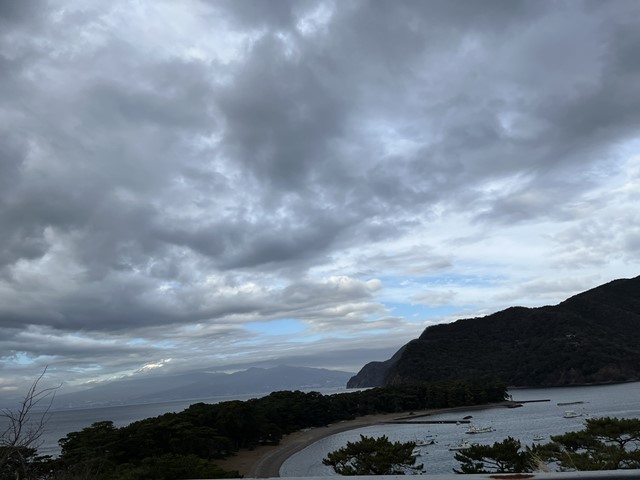
As I entered the towns of West Izu, I spotted various hotels scattered about; realizing that this region offers a unique vantage point for viewing Mount Fuji from the coast, I felt there was a certain charm to the idea of staying here just to take in the magnificent scenery.
After that, I drove along the coast all the way to Numazu.
The following day, I set out from Gotemba toward Doshi Village in Yamanashi Prefecture, hoping to enjoy a drive with views of Mount Fuji.
Unfortunately, the weather was a mix of rain and snow, so I was unable to catch a glimpse of the mountain.
It turned out to be quite a long drive, but because I was able to mix in sightseeing—navigating both mountain roads and coastal routes—it was a truly fulfilling journey.
I would love to go for another drive on a day with better weather.