I visited the Oe Catholic Church in Amakusa.
This is my first time visiting Amakusa.
Amakusa is associated with the Hidden Christians and Amakusa Shiro, so actually setting foot here for the first time feels deeply moving.
Today, I plan to sightsee around Amakusa before taking the ferry over to the Kyushu mainland.
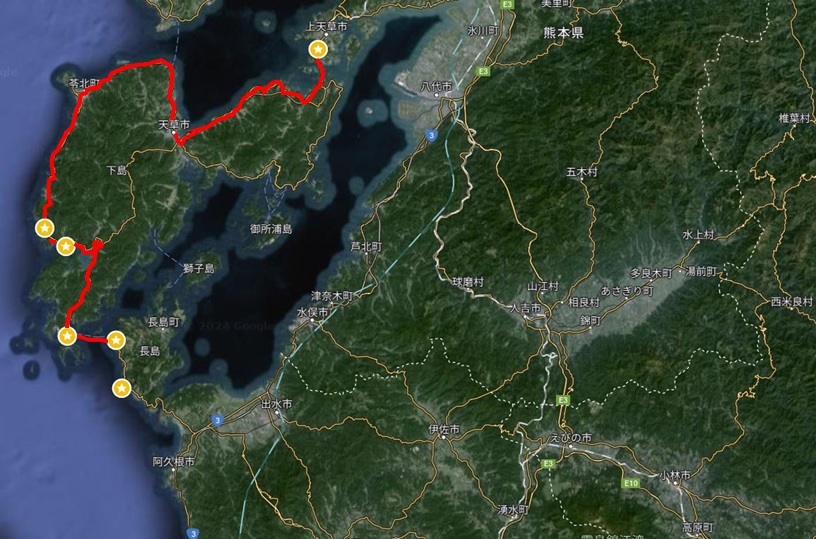
Google Mapより
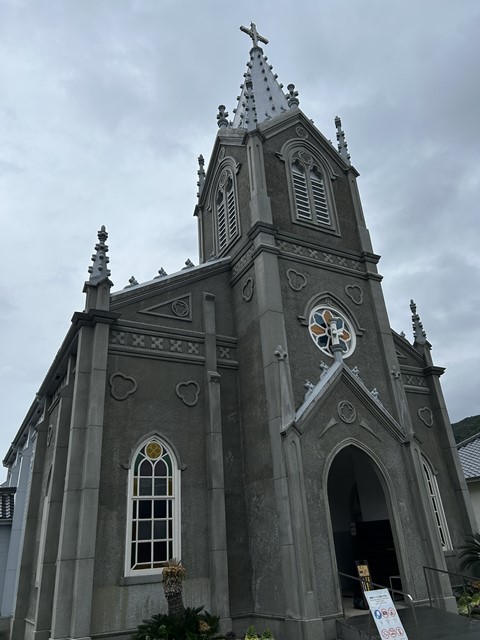
The first stop was Ooe Catholic Church.
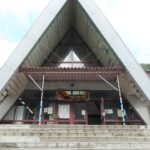
Situated atop a hill in the town of Ooe on the west coast of Amakusa, this Gothic-style church features dazzling white walls.
It was the first church built in Amakusa after the ban on Christianity was lifted—following an era when the faith was prohibited. The current structure was erected in 1933 through the collaborative efforts of Father Garnier, a French missionary who had come to Amakusa to spread the faith, and the local congregation.
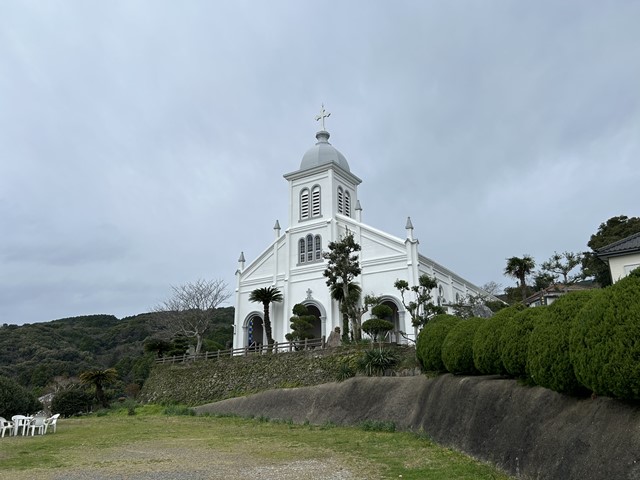
It is a pure white church that suddenly appears atop a small hill as you travel along a road lined with houses.
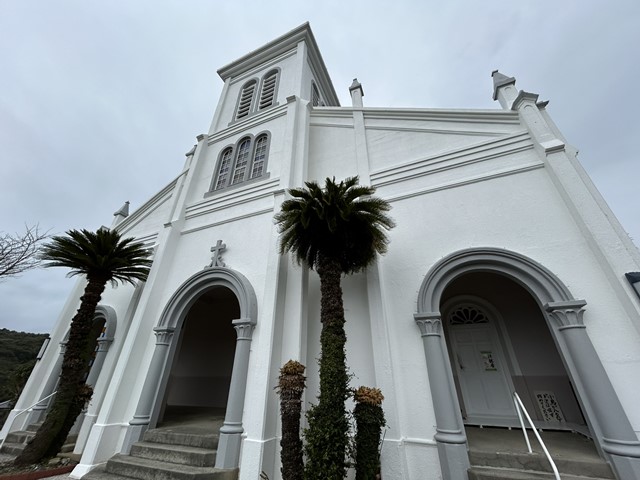
Although the place is compact, both the garden and the building appeared to be meticulously maintained.
Unfortunately, it was drizzling on the day of our visit, and there was only one other group of visitors besides us.
We paid a small contribution and stepped inside the church.
I had toured various religious buildings—from small churches to grand cathedrals—during my travels in Europe; the interior here featured an organ and a statue of Christ, and the atmosphere evoked a sense of the columns found in the Sagrada Família, albeit on a smaller scale.
It felt somewhat surreal to see a church like that standing amidst the Japanese landscape.
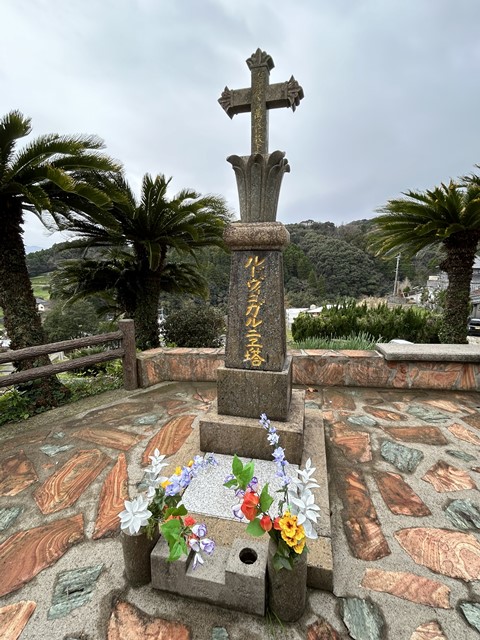
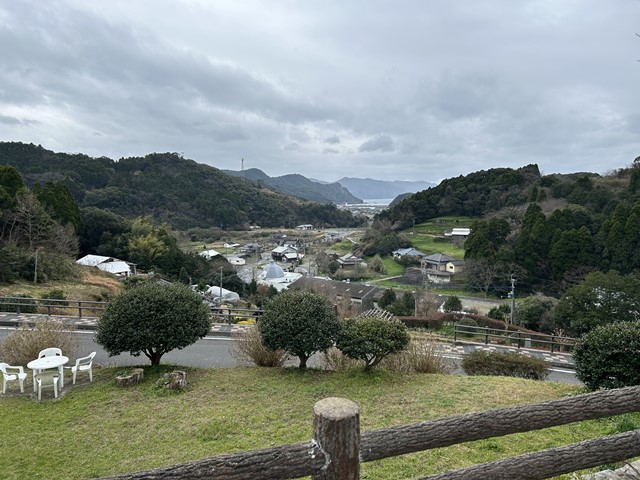
Beside the church lies the grave of Father Ganiel, and the view of the surrounding villages and their agricultural landscapes from there is truly beautiful.
Photography is prohibited inside the church, so I don’t have any photos to show you; however, the moment you step inside, you feel as though you are in a European church, so I highly recommend visiting.
By the way, you can use the public restroom located near the church.
Visit the Sakitsu Village, where everyday Japanese life and Christianity blend together.
Located about a ten-minute drive from Oe Cathedral is the Sakitsu Village.
Sakitsu is a fishing village situated near the sea, featuring a Western-style church standing amidst the private homes.
According to the village’s official website, the Nagasaki and Amakusa regions were areas where people secretly maintained their Christian faith during the era when the Edo Shogunate strictly prohibited the religion.
Missionary work began there in 1569, led by Jesuit missionaries, and the area saw most of its villagers convert to Christianity.
As a fishing village, Sakitsu developed a unique form of faith; for instance, residents worshipped *Deus* (God) as a deity of bountiful catches and venerated the patterns inside abalone shells, likening them to the Virgin Mary.
We visited on a weekday during a light drizzle, so there were only one or two other groups of tourists besides us.
Perhaps thanks to the weather, we were able to park in the lot in front of the tourist information center, which has space for only two or three vehicles.
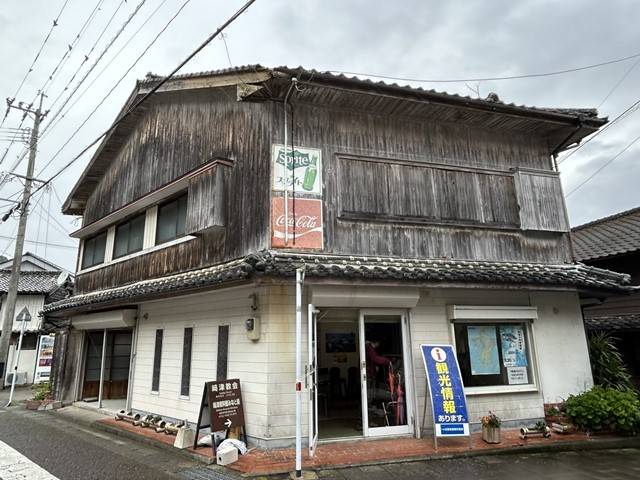
On busy days, such as holidays, you will likely need to use one of the parking lots located a bit further away.
There is permanent staff at the tourist information center; when they saw us about to go sightseeing without umbrellas, they kindly lent us some.
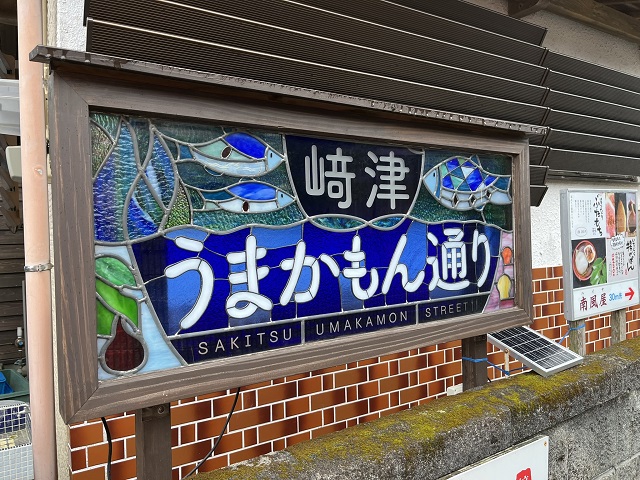
The official website notes that since sightseeing involves walking along narrow residential streets, visitors should be careful not to disturb the local residents.
It seems that small eateries and cafes are generally available in the area.
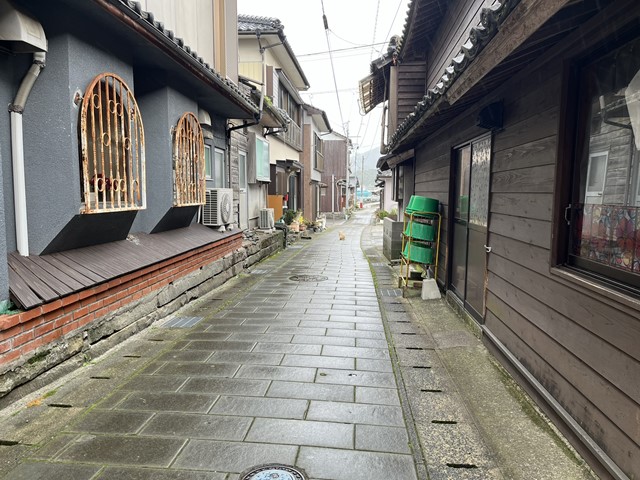
Then, just a short walk from the tourist information center, the Sakitsu Church comes into view.
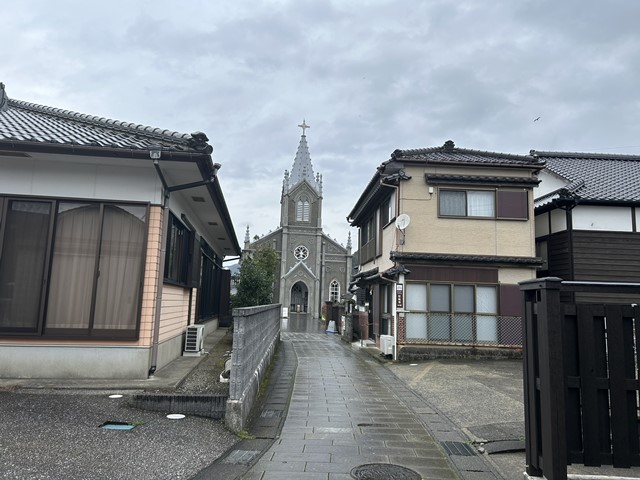
Although the church stands on a spacious plot, it appears quite suddenly amidst the surrounding private homes.
The cross-shaped cutout in the wall facing the street gives it a distinctive church-like character.
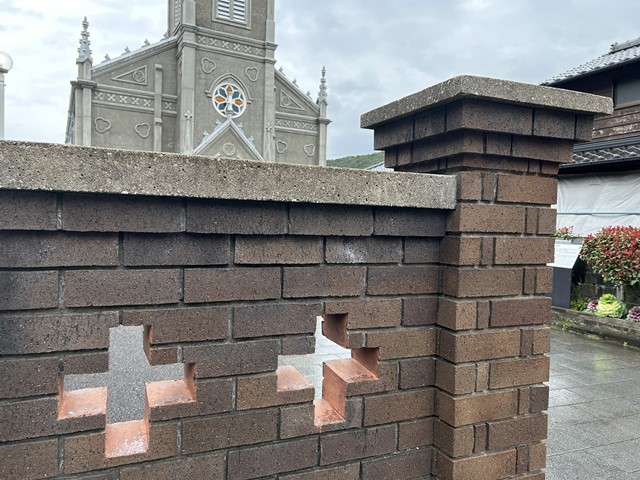
Sakitsu Church was reportedly built in 1934.
It stands as a symbol of the village—and a testament to the faith’s revival—following more than two centuries during which Christian believers in the Sakitsu settlement endured hardship and practiced their faith in secret.
I was able to tour the interior, and I was struck by the fact that the floor was covered with tatami mats; it was a unique church unlike any I had ever visited in Europe.
Having tatami flooring is said to be a rare feature for a church in Japan.
When we visited, the church stood right next to ordinary private homes—a location that made me wonder, “Why is there a church here?” I learned that this was a site where the *fumi-e* ritual (forced trampling on religious images) was conducted during the era when Christianity was banned; the church was deliberately built in this very spot.
It is said that the church was constructed to nestle close to the local homes precisely because of this history.
Indeed, the sight of a church appearing so suddenly amidst a landscape of Japanese houses is perhaps something unique to the Amakusa region.
Near the church, there was a seaside area with calm waters and benches.
Although the weather was rainy, the sea looked beautiful.
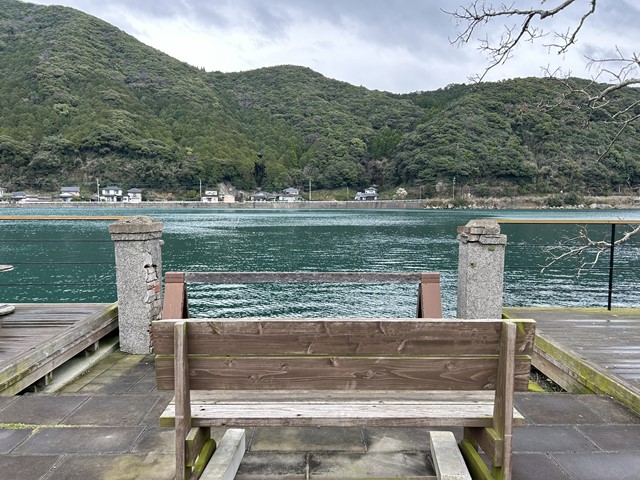
On a clear day, it seems you can order ice cream or coffee at a nearby café and take a break on a nearby bench; however, because of the light rain and the fact that it was quite early—too early for the café to be open—the area was still quiet.
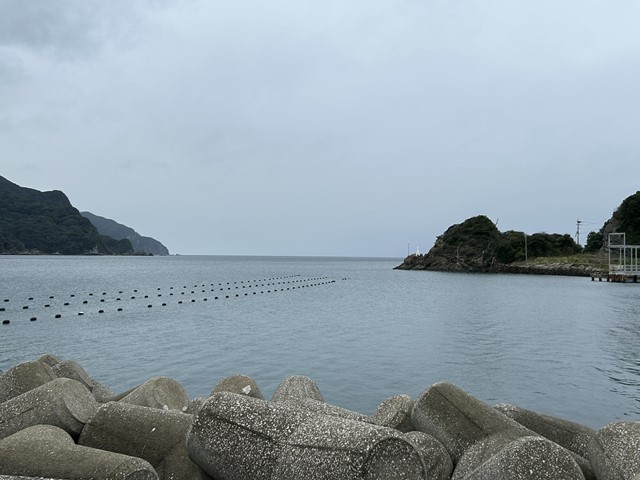
Also, there was a spot in the waters of Sakitsu where a statue of the Virgin Mary had been erected.
It is said to have been built facing the sea to watch over the fishing boats.
Can you see it?
When I returned to the tourist information center, I found a shrine that looked like it had a long history.
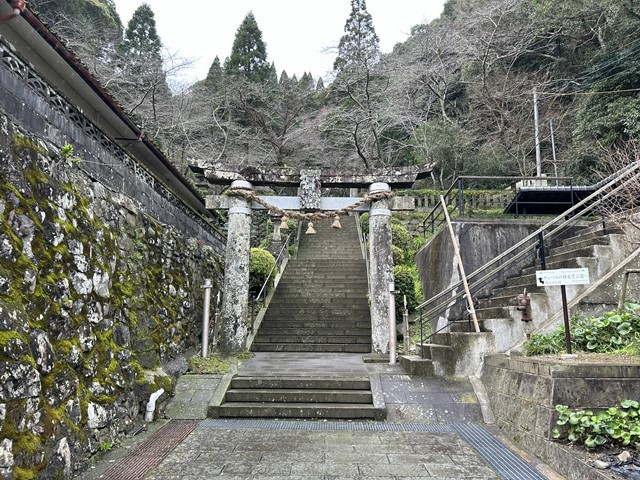
It feels somewhat unusual to find an old-fashioned Shinto shrine near a church; however, the story goes that during the era when Christianity was banned, people would visit the shrine while secretly directing their prayers toward the Christian God.
Although this land bears a history of past sorrow, the area—including Nagasaki and Amakusa—is now designated as a World Heritage Site.
I hadn’t expected to experience such an exotic, foreign atmosphere in Japan, so it was a truly wonderful time.
Travel by ferry from Ushibuka Port in Kumamoto Prefecture to Kuranomoto Port in Kagoshima Prefecture.
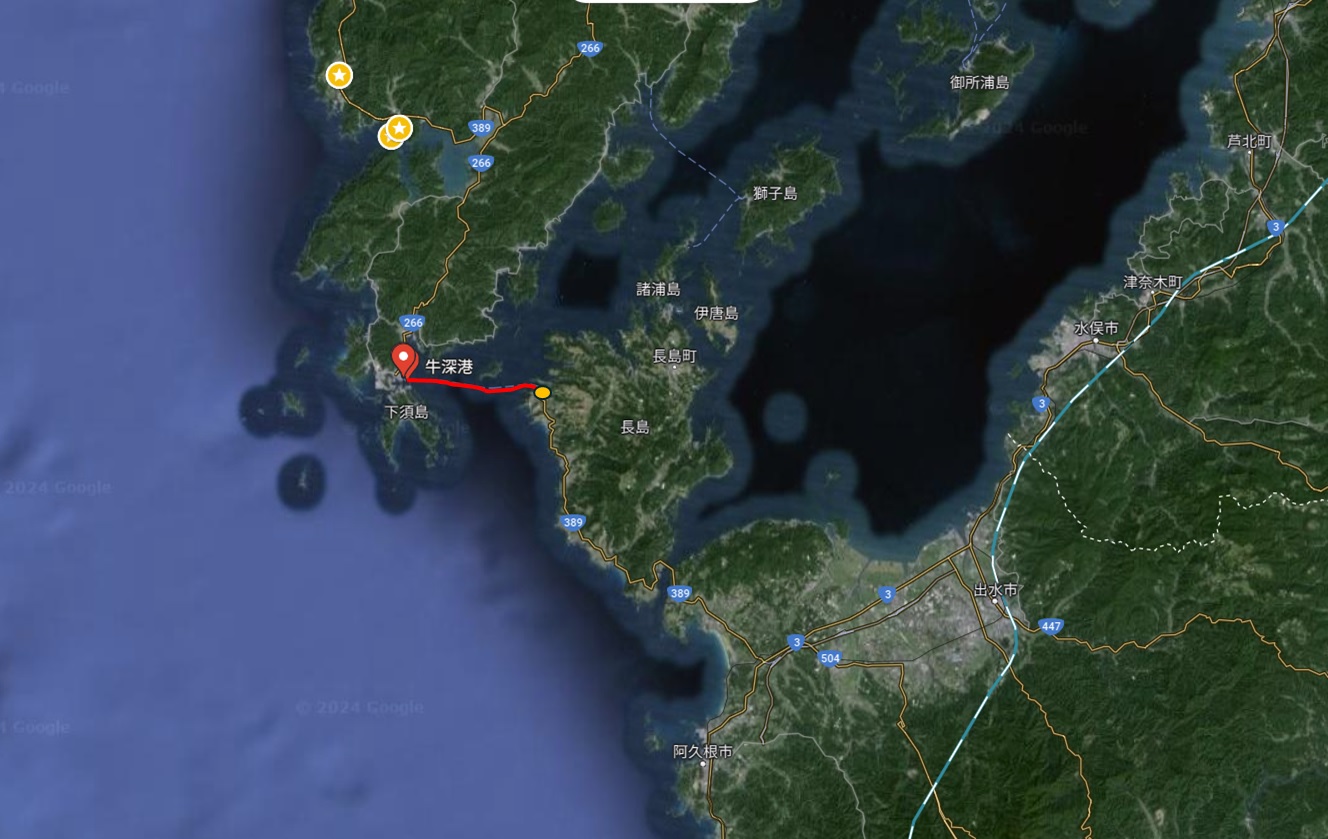
牛深港から蔵之元港へ(Google Mapより)
After sightseeing in Amakusa, take a ferry from Ushibuka Port to mainland Kyushu.
On the way to Ushibuka Port, I felt like I was going through a mountain pass over a mountain pass.
As soon as we passed through the mountain pass, the sea and the port appeared.
Park your car at the ferry terminal and go to buy your boarding ticket.
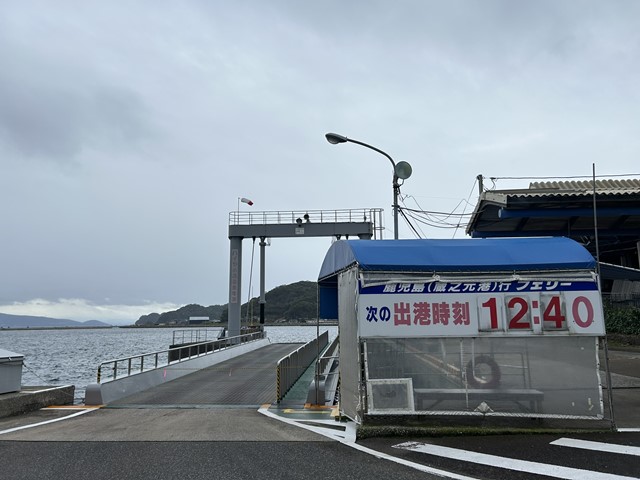
I didn’t make a reservation for the ferry in advance, but I was able to purchase a ticket without any issues.
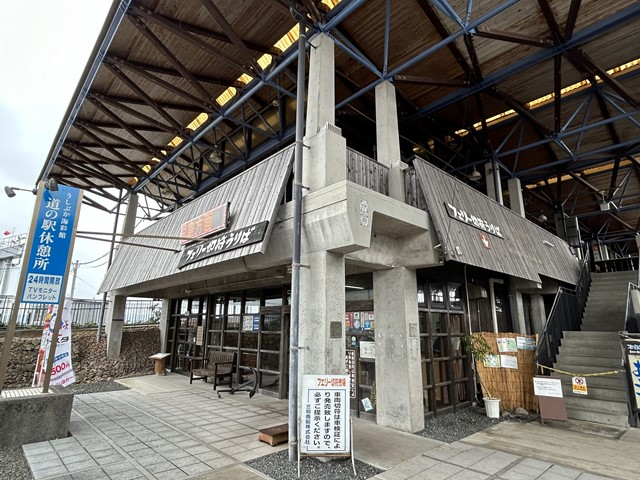
The fare for one vehicle and two adults came to 3,370 yen (2,370 yen plus 1,000 yen).
The boat ride takes about 30 minutes.
Ferry HP: https://ezax.co.jp/
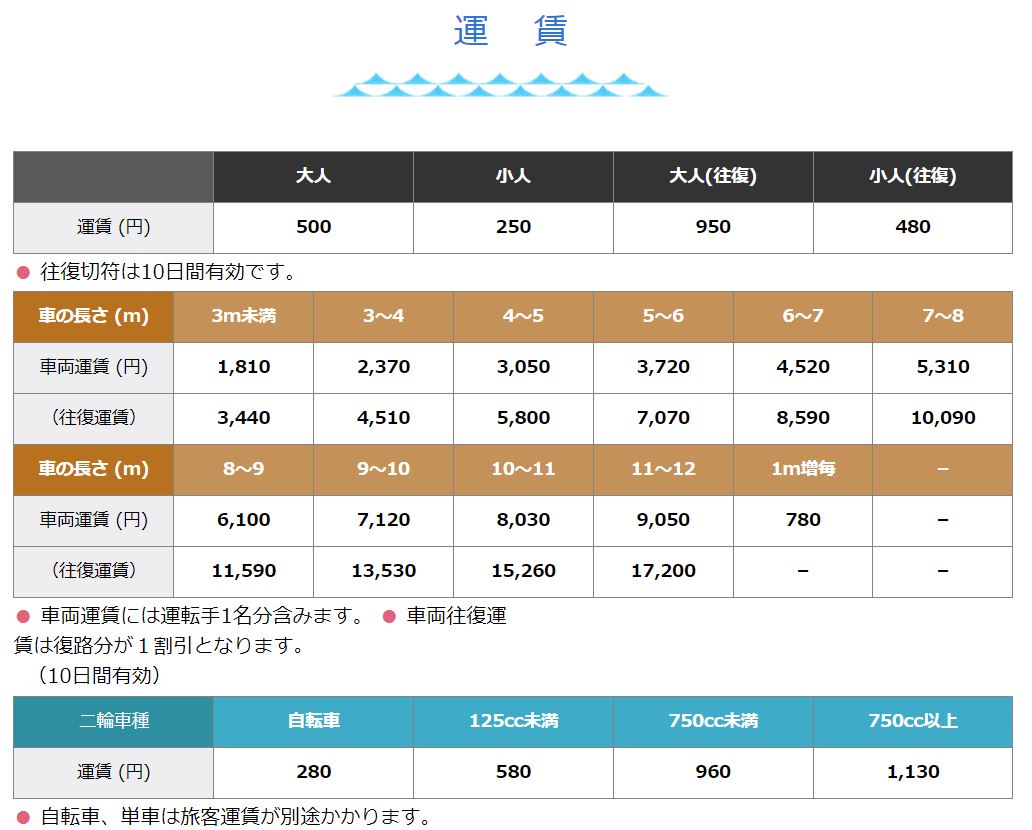
三和フェリーHPより
The ferry operates nine trips a day.
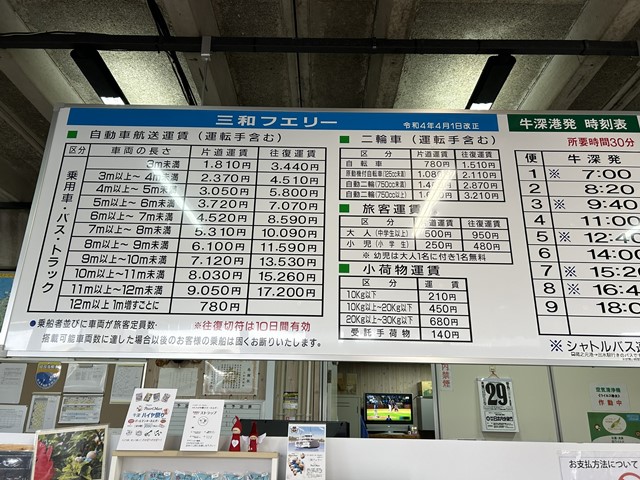
Since I was driving a *kei* car (light vehicle), the one-way fare was 2,370 yen, and I was able to buy a ticket without a prior reservation.
Within the same complex, there was a facility called “Ushibuka Kaisaikan” that looked really appealing.
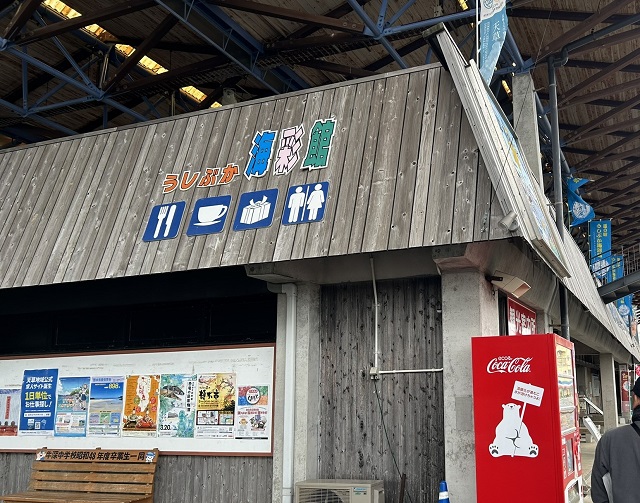
On the first floor, there were live fish tanks—including one with sea bream—and the delicious aroma of dried bonito flakes wafted through the air; I really wanted to visit the on-site restaurant, Aosa, but I had arrived just before departure time. Worried that I might miss the boat, I decided to have curry at a nearby café instead.

If you have the time, I’d recommend the seafood bowl at Restaurant Aosa.
The owner and his mother at a nearby café called “Chirorin-mura” (I’m pretty sure that was the name) were very friendly and struck up a conversation with us travelers.
They mentioned that the owner’s daughter lives in Tokyo; as I tucked into my curry, I couldn’t help but think about what a long, arduous journey it must be to travel back and forth between Amakusa and Tokyo to see her.
Departure
Well, the ferry’s departure time is drawing near, so I’m hurrying back to the terminal.
The rain has started coming down quite hard, but passengers with vehicles will simply drive straight onto the ferry.
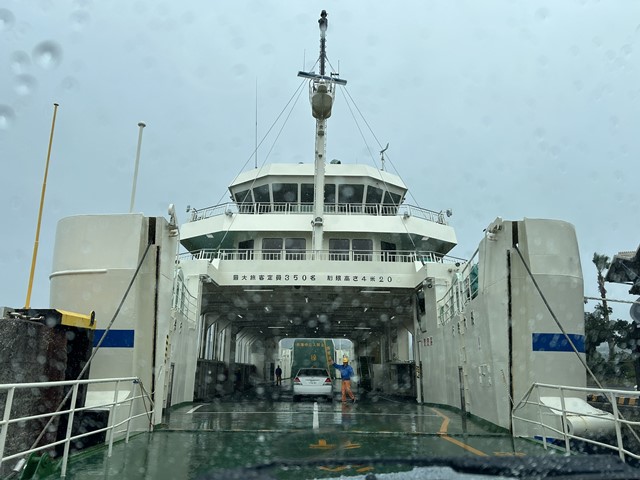
It’s time to say goodbye to Amakusa amidst the driving rain.
Bye-bye—I’ll be back.
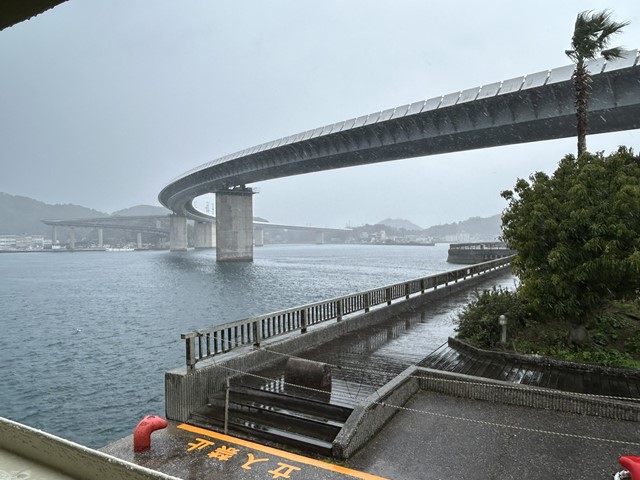
In the blink of an eye, the port was left behind…
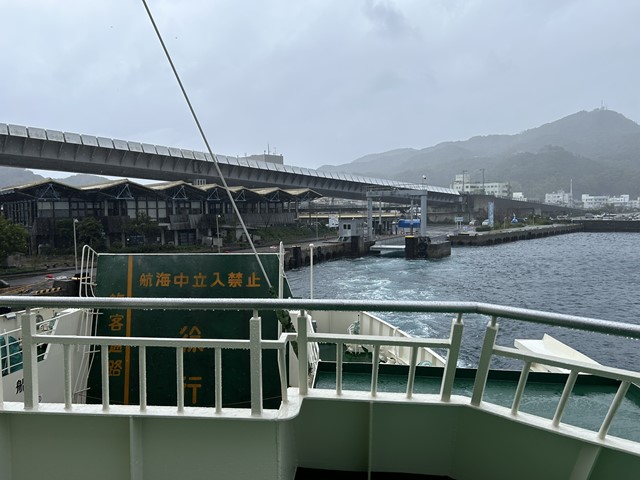
Passengers boarding on foot and those with vehicles were making their way onto the ferry.
As the weather was unsettled, there were relatively few passengers that day.
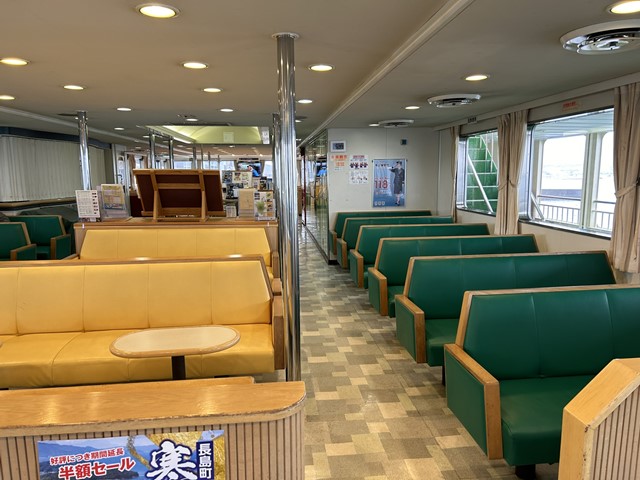
I took the sofa seat at the very front.
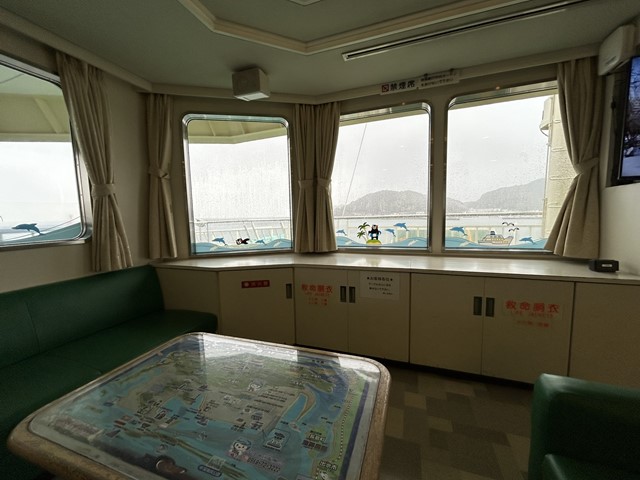
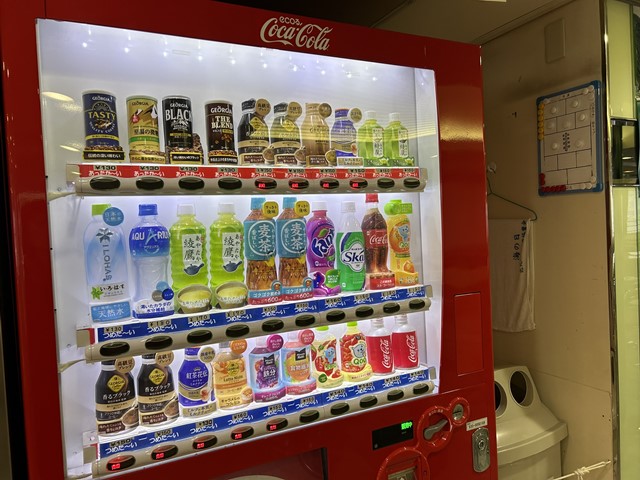
The ship is equipped with amenities such as a TV, vending machines, and restrooms.
As for dining, there are no food facilities since the trip takes only about 30 minutes.
I stepped out onto the deck for a moment, but the ship was rocking quite a bit due to the rain and wind—making it dangerous—so I quickly went back inside and stayed put.
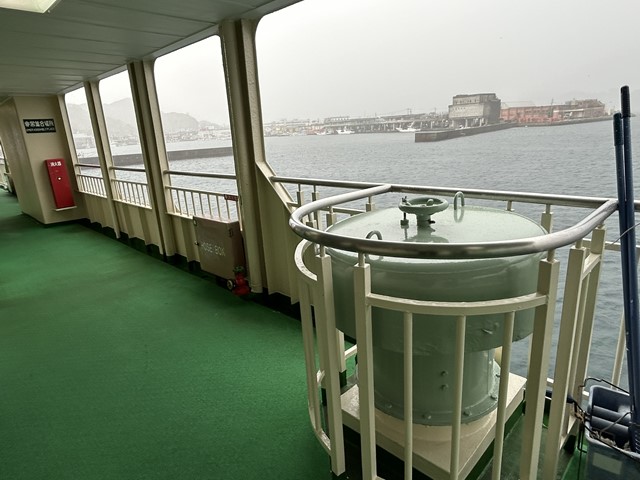
With ten minutes remaining until disembarkation, passengers with vehicles are returning to their cars to get ready to get off.
We have arrived at Kuranomoto Port, located on the Kagoshima Prefecture side.
A “Welcome to Nagashima” sign greets us upon arrival.
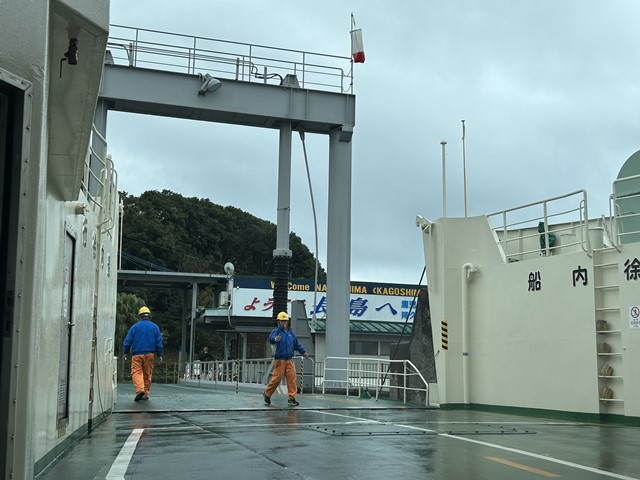
This is what the ferry terminal on the Kuranomoto Port side looks like.
It is quite small and compact.
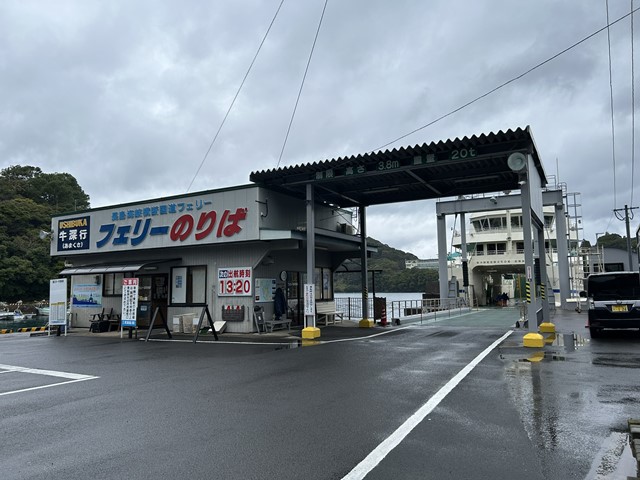
I realized only after arriving here that there was a place to eat right next to the ferry terminal.
I felt a bit of regret, thinking I should have had a seafood bowl there, but since I didn’t know about it, it couldn’t be helped.

There is also a restroom in front of the ferry terminal, and it appears you can take a bus to Izumi Station.
That is a convenient transportation option for passengers using the ferry on foot.
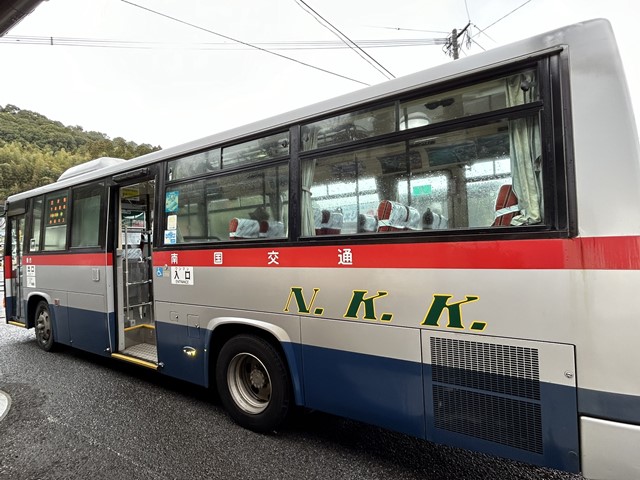
Nangoku Kotsu HP: https://nangoku-kotsu.com/
Bus Timetable from Kuranomoto Port Ferry Terminal:https://nangoku-kotsu.com/wp-content/uploads/pdf/kagoshimakogai/izumi/amakusa_R4.pdf
And so, we made our way over to the Kyushu mainland.
Next, we’re heading for the southern part of Kagoshima Prefecture!