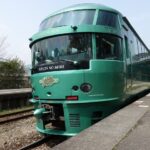
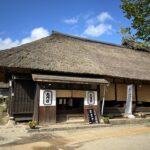
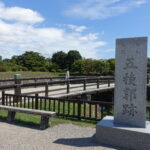
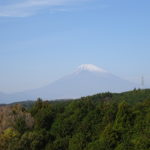
We’ll be driving around, mainly in southern Kagoshima.
Good morning.
I’m on a driving trip through Kyushu.
Today, I’m setting off from Kiire in Kagoshima Prefecture.
I’ll be driving mainly around the southern part of Kagoshima today.
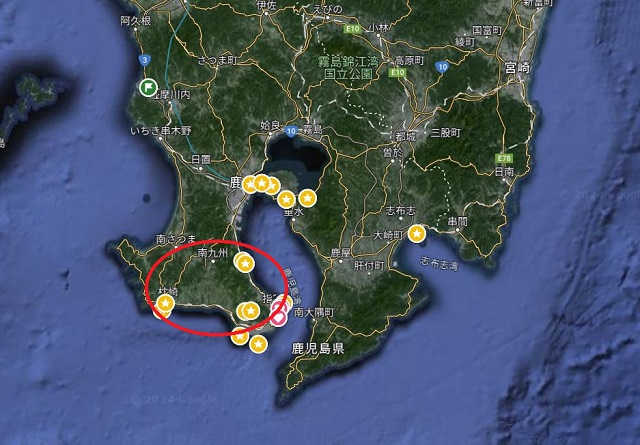
Google Mapより
The overall itinerary involves departing from Kiire and making a counter-clockwise loop around the southern tip on the western side of Kagoshima, heading toward Ibusuki.
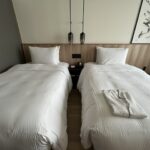
Last night, I stayed at HOTEL AZ Kagoshima Kiire.
Related Article:【関東~九州ドライブ旅】宿泊レビュー:鹿児島県の喜入でホテルAZに宿泊
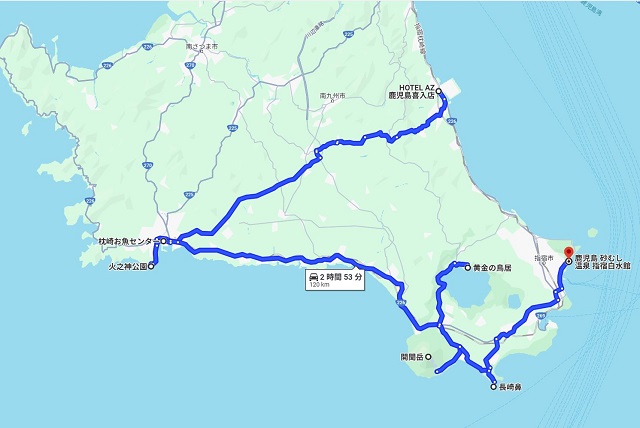
Google Mapより
First, we’ll head towards Makurazaki.
I set off right after breakfast, so I have plenty of time today.
To start, I’m taking a drive along local roads, heading toward the Makurazaki area.
The route takes me straight across the peninsula on the western side of Kagoshima.
I must have been driving near Chiran—a town famous for its tea—because at one point along the road, I came across vast tea plantations with the majestic Mount Kaimon visible in the distance.
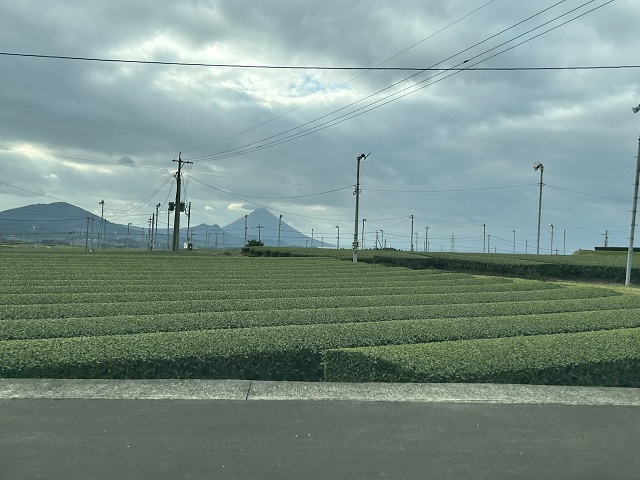
It’s a bit cloudy, but stumbling upon unexpected scenery is one of the real joys of a drive.
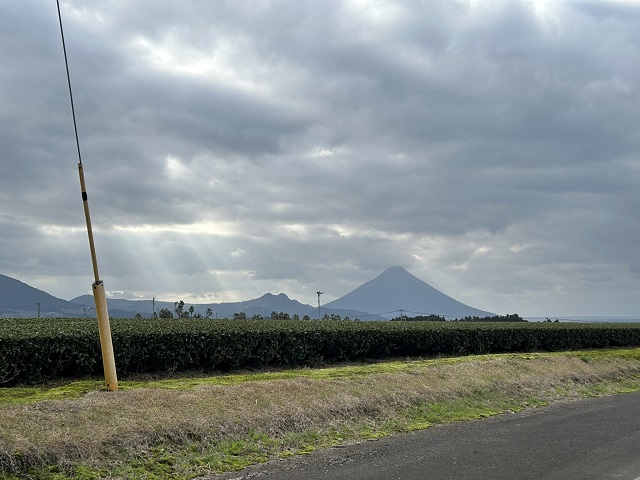
I’ll arrive in Makurazaki in about 50 minutes.
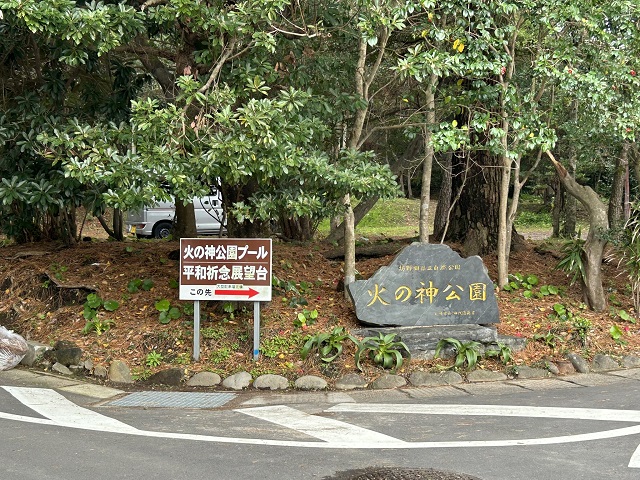
I had planned to have some seafood there, but since it’s still a bit early, I think I’ll visit “Hinokami Park”—a park overlooking the sea—beforehand.
You can look out over the East China Sea from Hinokami Park.
Living in the Kanto region, I had only ever seen the name “East China Sea” in social studies textbooks.
I never imagined the day would come when I’d see the East China Sea right before my eyes.
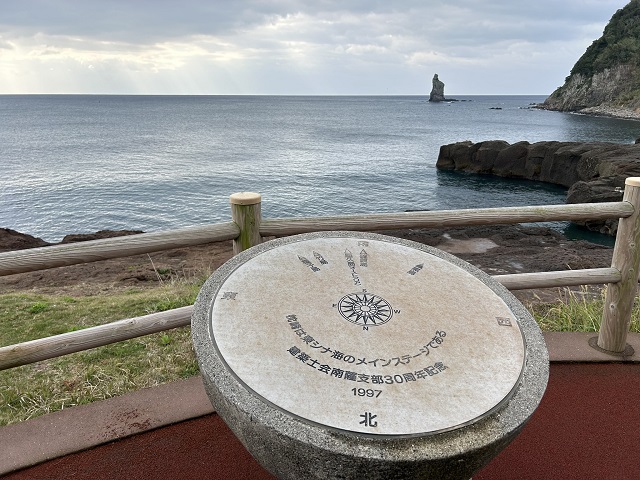
It was still early in the morning, so aside from us, there were hardly any people around—just a local resident maintaining the park and some campers who had been staying right next to the cape since the previous day—allowing us to relax and listen to the sound of the sea.
You can see Mount Kaimon from every direction in this area.
This time, we were able to see Mount Kaimon across the water.
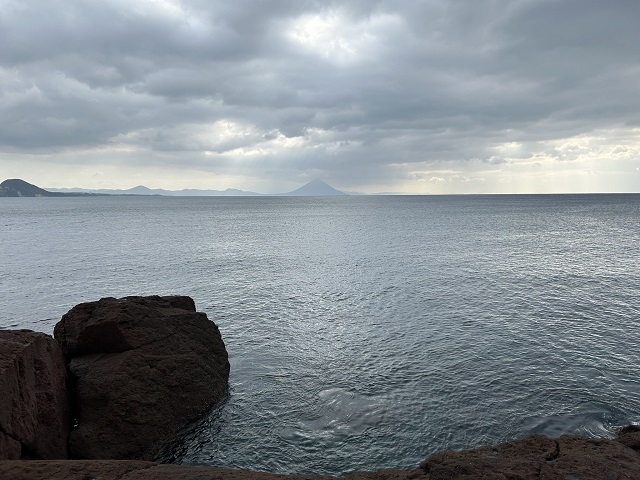
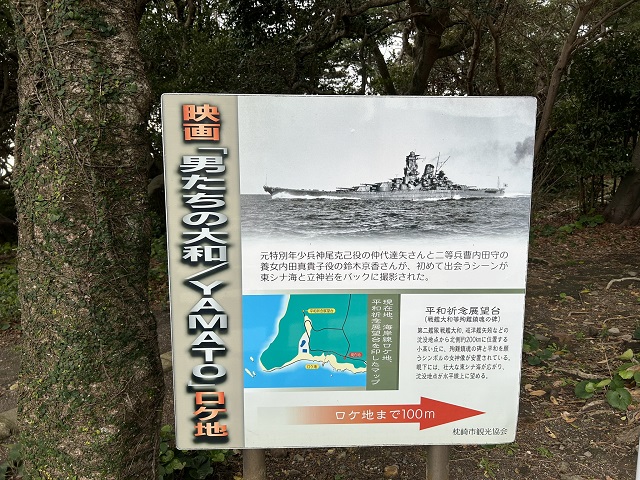
Hinokami Park was quite quiet when we visited, but a short walk up to higher ground within the park brought us to the Peace Memorial Observatory, which also houses a monument dedicated to the souls of those lost with the battleship *Yamato*.
The reason this memorial stands here is that the site overlooks the waters where the *Yamato* sank.
The *Yamato* was the largest battleship in the world at the time of its construction during World War II; it was under the command of Admiral Isoroku Yamamoto and saw its first combat action at the Battle of Midway.
However, on April 7, 1945, while sortieing toward Okinawa, the ship was intercepted by the U.S. Navy off Cape Bono-misaki in the East China Sea and subsequently sunk.
The memorial was likely erected here as a tribute to the fallen because the location where the ship went down off Cape Bono-misaki is visible from this observatory.
It seems this place has also served as a filming location for a movie.
I have certainly heard of *Yamato* (Otoko-tachi no Yamato).
I really ought to watch it sometime.
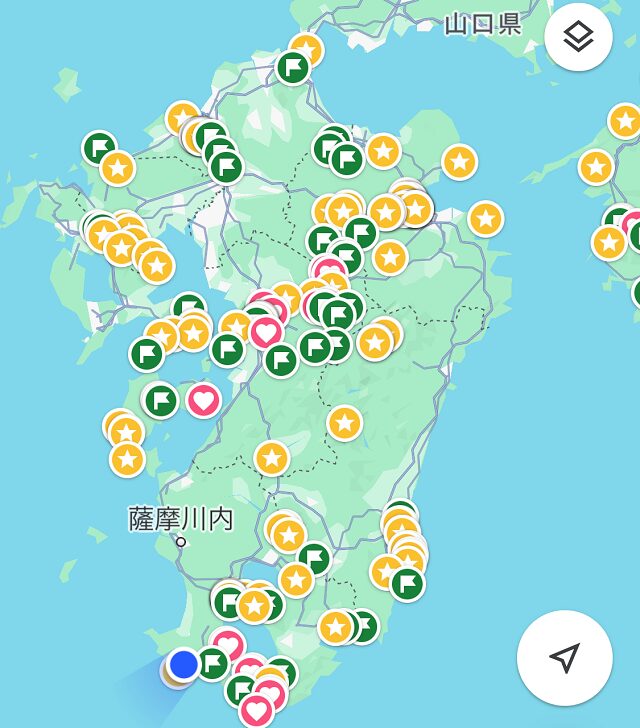
Looking at Google Maps makes it clear, and it really brings home the fact that I’ve made it all the way to the southern tip of Kyushu.
Enjoy seasonal bonito at the Makurazaki Fish Center.
It is now around 10 o’clock.
I had planned to have a seafood lunch in Makurazaki, but I’m not hungry at all yet.
Still, since I’ve made the trip to Makurazaki, I’ll pay a visit to the “Makurazaki Fish Center.”
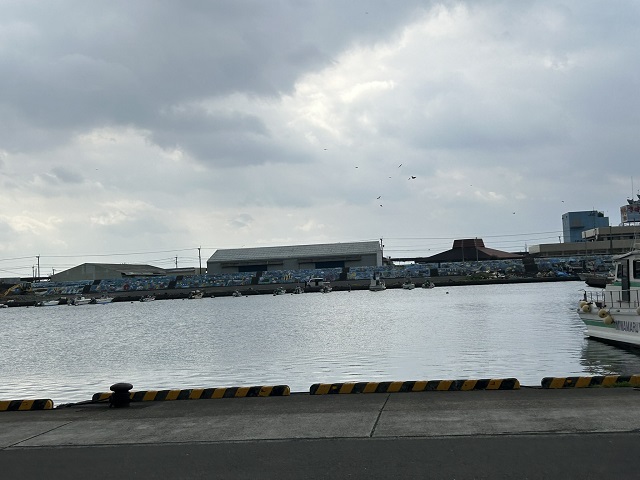
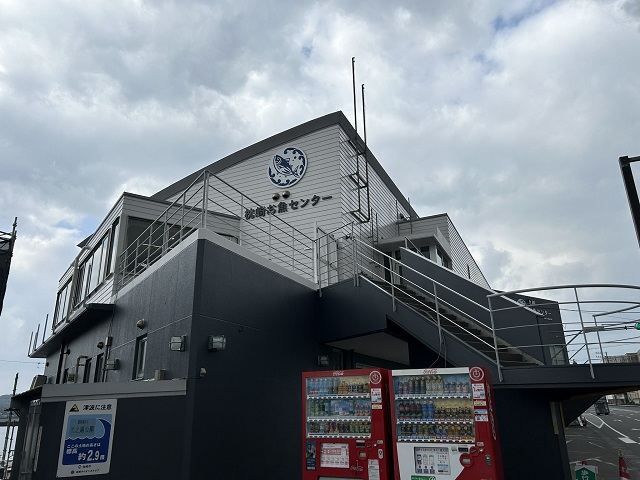
This is the view from the parking lot right next to the harbor; it’s quite a spacious lot.
The Makurazaki Fish Center is a two-story facility; the first floor offers souvenirs—such as *katsuobushi* (dried bonito flakes)—and local vegetables, along with a small section selling sashimi slices and a spot for light meals.
The second floor appears to house a restaurant.
I didn’t go up there myself (I couldn’t, as it opens at 11:00 AM), so I can’t say for certain, but there is a restaurant serving seafood caught in Makurazaki.
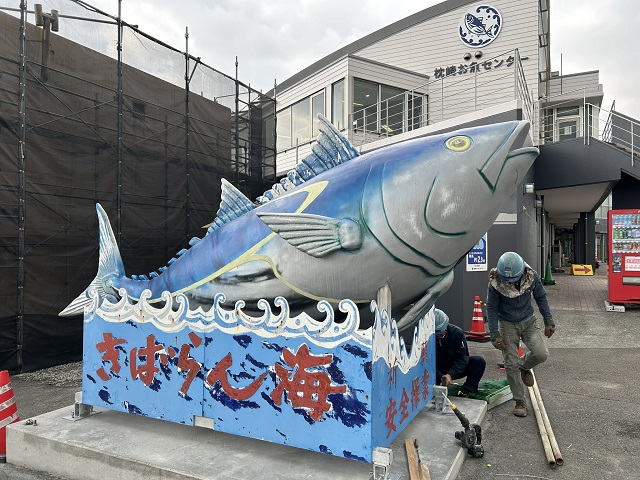
It seemed the place was undergoing renovations when we visited in March; workers were busy reinstalling the base for a large bonito sculpture.
Under normal circumstances, it appeared they also held live demonstrations of straw-roasting bonito outside for customers (though please correct me if I’m mistaken).
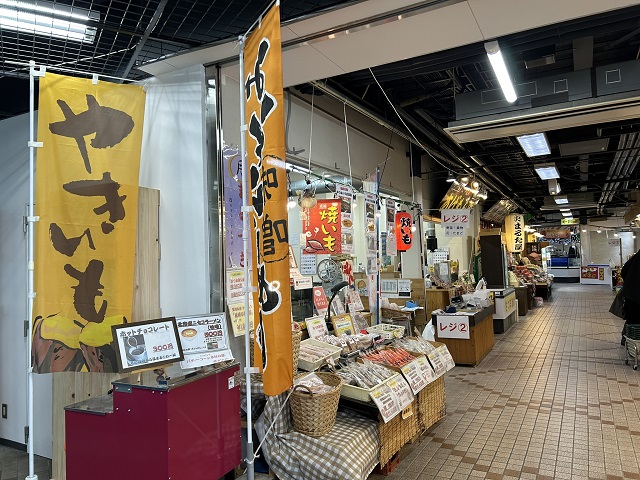
Inside the facility, a wide variety of local specialties were on sale, including roasted sweet potatoes, teas—such as Kyushu’s Chiran tea—and skipjack tuna products like *tataki* (seared tuna) and *katsuobushi* (dried bonito flakes), reflecting the area’s renown for the fish.
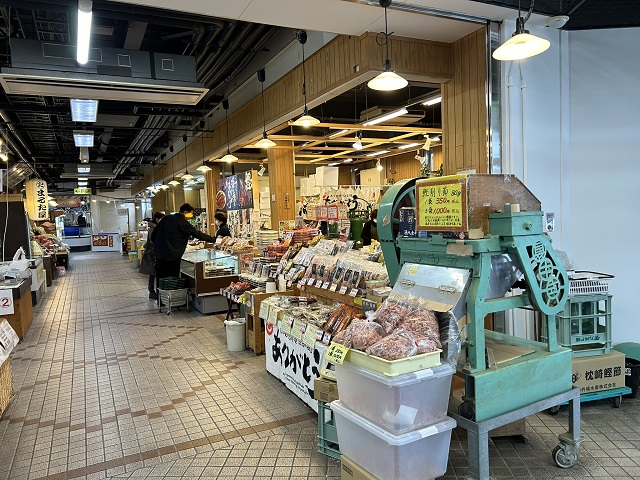
I really wanted the *katsuobushi* (dried bonito flakes)—especially since they had such a wonderful, freshly shaved aroma—but I had absolutely no room left in my bags, so I reluctantly had to pass on them.
They were high-quality, aromatic bonito flakes available at a very reasonable price.
Since the restaurants hadn’t opened yet, the man running the snack stall told me, “You’re welcome to bring food from other shops here to eat.”
So, I had some seared bonito (*katsuo no tataki*) from the sashimi sales section along with the salt-grilled bonito I ordered from his stall.
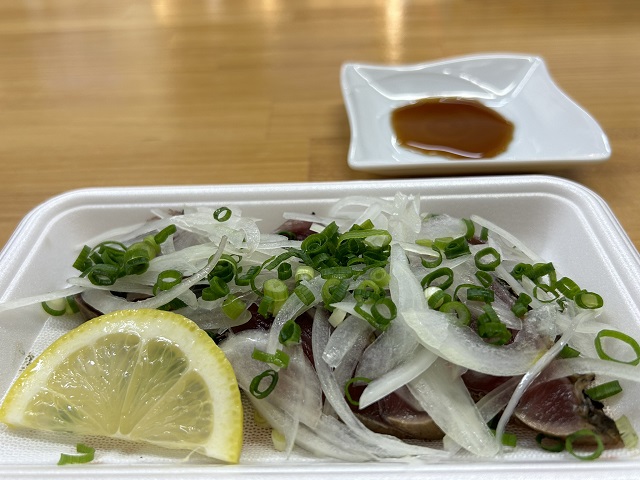
The man at the shop was very kind; he lent me a small dish for the *tataki* sauce and provided water and chopsticks.
Thank you very much.
And the highlight was definitely this *katsuo no tataki* (seared bonito)!
It had a wonderful aroma from the straw-searing process, and the fish was fresh and incredibly delicious.
At around 400 yen for a pack of about six slices, it was a very reasonable price for such tasty *tataki*.
I also bought some of the *tataki* sauce, which was sold separately.
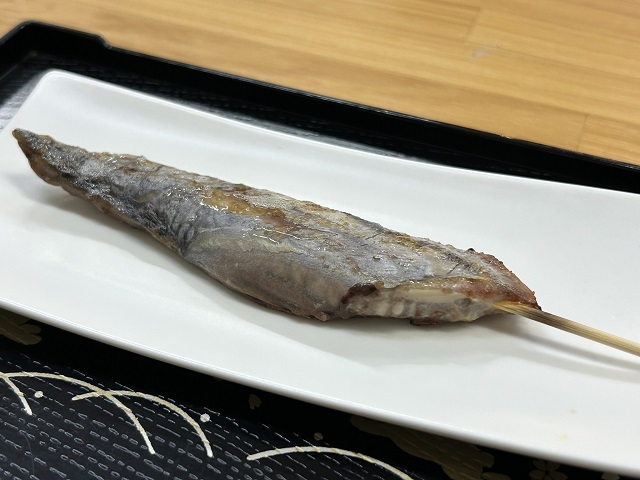
This is salt-grilled bonito.
It was delicious, with just the right amount of saltiness.
Both dishes were excellent, so I highly recommend visiting the Makurazaki Fish Center if you have the chance.
P.S. It seems that Nakamaru-kun also visited this place in April 2024 for a segment on the TV show “Tabi Salad”!
A drive with the beauty of Mt. Kaimon right before your eyes.
Having enjoyed some seasonal local delicacies, I decided to head east along the coast to get a closer look at Mount Kaimon.
I had already caught glimpses of the mountain from the tea plantations and Hinokami Park along the way, but it gradually loomed larger as I drew nearer.
I stopped at a scenic viewpoint I came across during the drive.
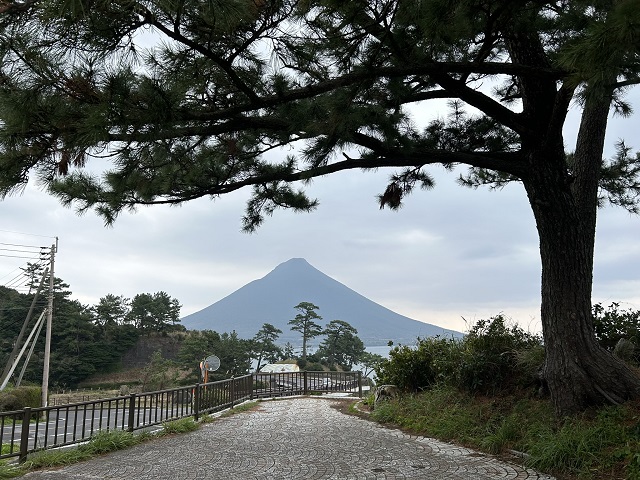
The contrast between the pine trees, the sea, and Mount Kaimon is beautiful.
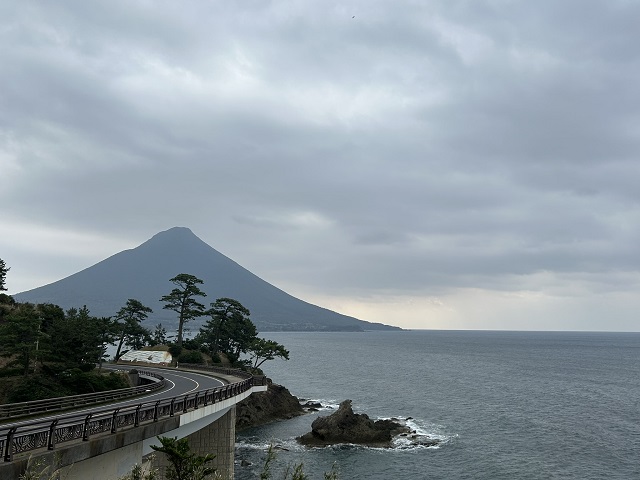
It was a shame the sky remained overcast, but the scenery was simply breathtaking.
From there, we drove on, aiming for Mount Kaimon.
There was a parking area at the foot of the mountain, but since the peak loomed so close, we decided the view was actually better from a spot slightly further back where we had stopped to take photos; consequently, we didn’t stop at the mountain’s base itself.
That was the kind of discovery you only make by actually going there.
We are heading for Lake Ikeda and the golden torii gate.
If you continue further east from Mount Kaimon, you will come to Lake Ikeda.
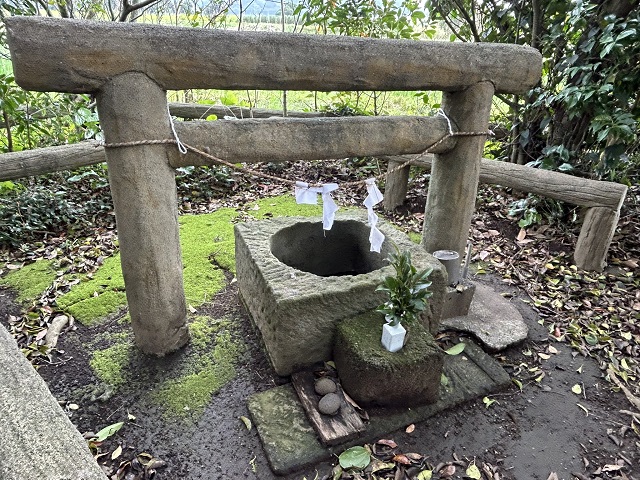
On the way, I saw a sign for “Tamanoi”—said to be Japan’s oldest well—so I made a brief stop to check it out.
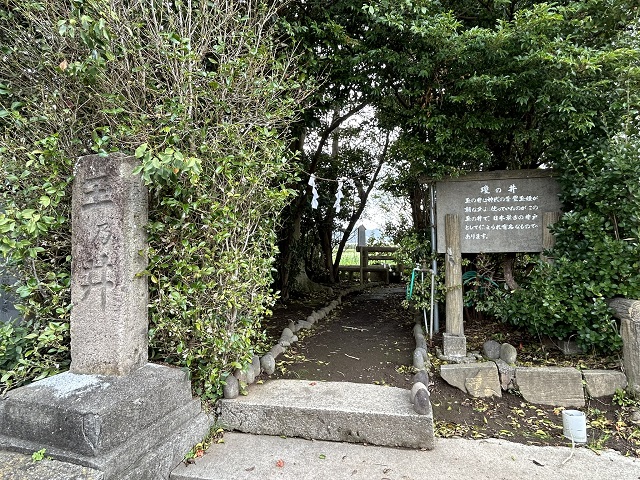
It is strange how, the moment something is described as the oldest in Japan, it immediately takes on an air of solemnity.
And finally, we arrived at the Golden Torii Gate.
You have to turn off the lakeside road onto a side path, but the entrance is a bit hard to spot.
There is a sign that says “Golden Torii Gate,” so you’ll want to keep an eye out for that.
There was no one else in the parking lot when we arrived.
It was a bit cloudy, and since it was morning, the angle of the sun meant it didn’t quite look as golden as it might otherwise.
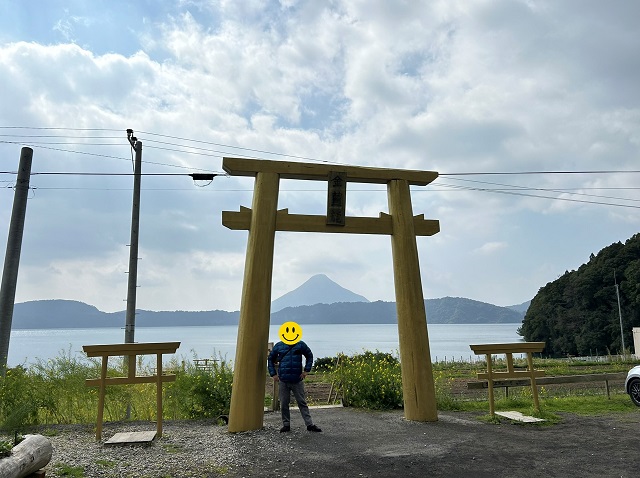
There are about 6 to 8 parking spaces.
Next to the torii gate is an auto campground with 2 to 3 sections, so there were washing areas and toilets available.
There is also a cafe space building, so on weekends you can have tea while looking at the unique scenery of Mt. Kaimondake, Lake Ikeda, and the golden torii gate.
There was also a mechanism in which water spouted out from this dragon when money was put into it.
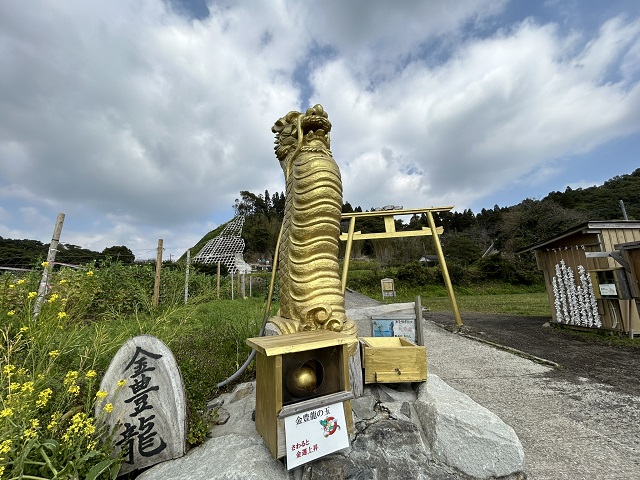
I don’t consider myself particularly spiritual, but simply relaxing while taking in the view of the golden torii gate, the shores of Lake Ikeda, and Mount Kaimon made the visit worthwhile.
What’s more, the rapeseed blossoms were in full bloom during this season, creating a beautiful contrast with the torii gate.
If you get a bit hungry, I recommend stopping by the nearby “Lake Ikeda Paradise” to take a break and browse for souvenirs.
Look for the statue of “Issie” in the parking lot—it serves as a handy landmark.
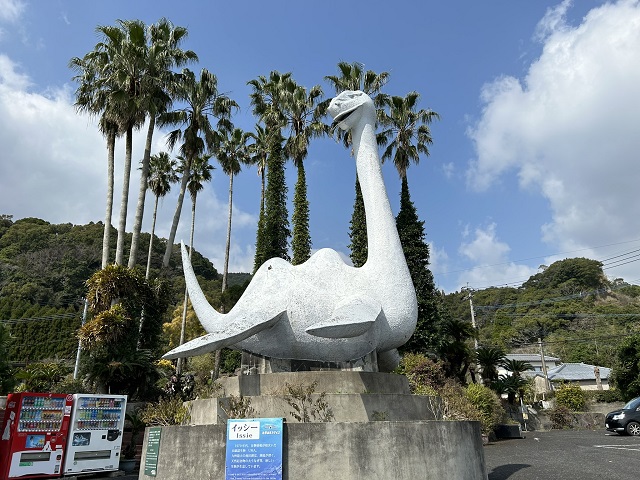
The flowerbeds along the street right in front are beautifully maintained, making it a very pleasant place to be.
To Nagasaki-bana and Ryugu Shrine
Before heading to Ibusuki—where I’m staying tonight—I decided to stop by Nagasakibana, the southernmost tip of the peninsula on the left side of Kagoshima.
To get to Nagasakibana, you park your car and walk along a street lined with souvenir shops; just before reaching that street, a traffic attendant guides you to one of the shops’ parking lots.
It was convenient to park in the lot closest to Nagasakibana.
The idea seems to be that by opening up their parking spaces to tourists, the shops encourage visitors to grab a bite to eat or do some shopping on their way back.
Just before reaching Nagasakibana, I came across a shrine called Ryugu Shrine, which featured a beautiful vermilion color.
It likely has some connection to the Dragon Palace (Ryugu-jo) from the folktale of Urashima Taro.
Although the shrine itself is new, its design successfully evoked the atmosphere of the Dragon Palace.
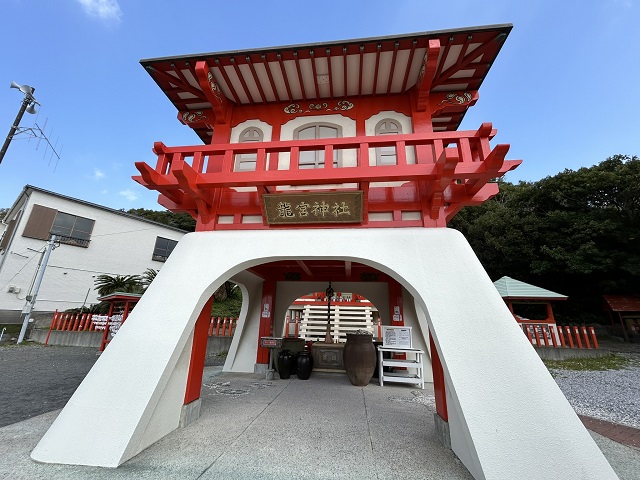
As you descend the steps from the shrine, the landscape of Nagasaki-bana opens up before you.
You can also see Mount Kaimon from here, offering a truly spectacular view.
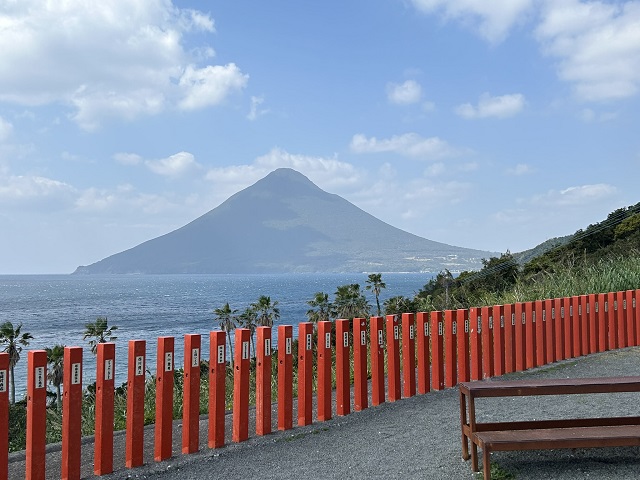
From any vantage point, you can see the rough sea and the beautiful Mount Kaimon.
It was around this time that the clouds finally began to break, and the sky turned blue.
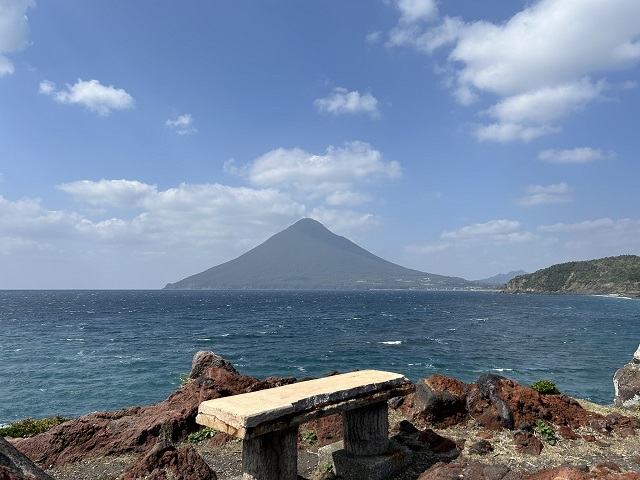
Nagasakibana doesn’t seem to be a cape, but there was a lighthouse there.
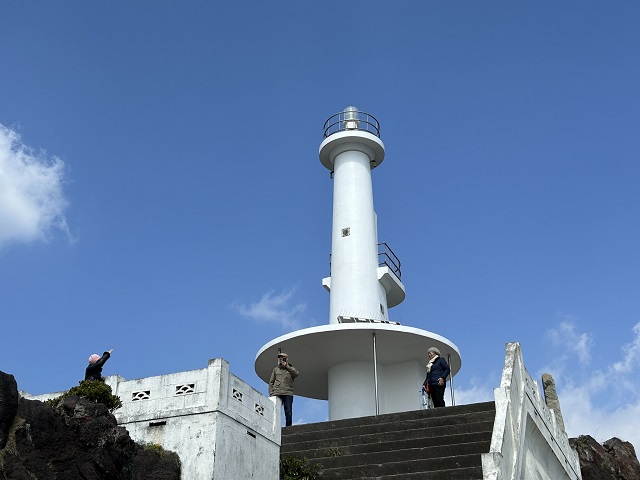
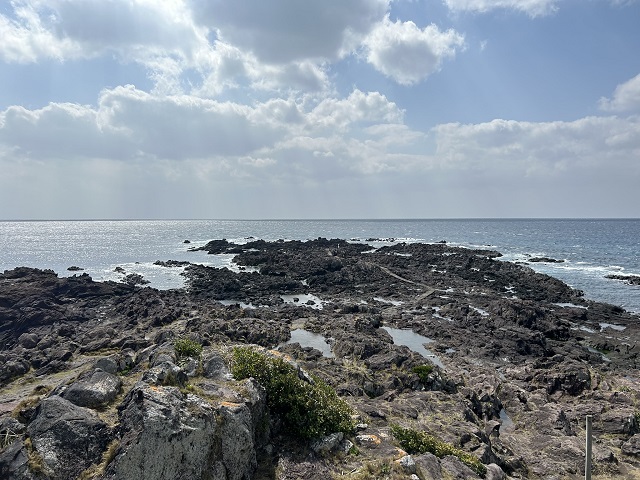
It seems you can walk down the lighthouse stairs and make your way along the rocky surface to the tip of the cliff.
However, the footing is poor and the wind is surprisingly strong—posing a risk of being blown away—so I simply enjoyed the view from where I was.
We arrived at Nagasaki-bana around midday, so having a meal along the souvenir shop street might be a good idea.
We were starving too, but for some reason… I have no memory of eating there.
I highly recommend the magical “Chiririn Road” at Chirin-ga-shima Island.
I’ve made my way to Ibusuki.
Although the drive is nearing its end for the day, I’ve decided to stop by the “Chiririn Road” on Chirin-ga-shima Island before checking into my accommodation.
Chirin-ga-shima Island is located to the right of Ibusuki City.
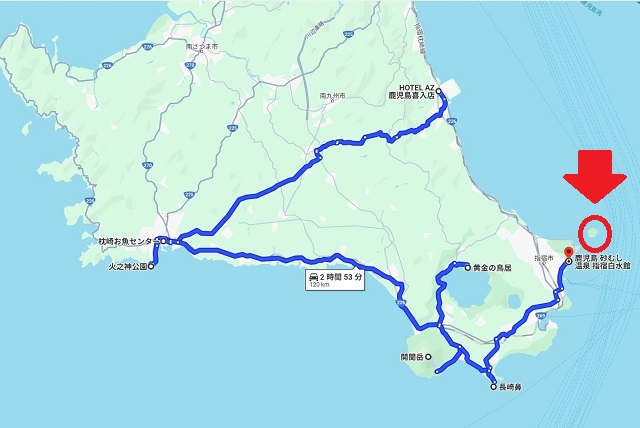
Google Mapより
Although Chirin-ga-shima Island is separated from the Satsuma Peninsula, a sand path connecting the two emerges at specific times during certain periods.
This path is known as the “Chiririn Road,” and our visit in early March coincided with the time of year when it appears.
The Chiririn Road stretches for approximately 800 meters; because the sand creates a connection between the mainland and the island, the site is considered a “power spot” said to bring good fortune in relationships.
It also served as a filming location for the 2008 NHK historical drama *Atsuhime*.
There is a campsite nearby, so the parking area was very spacious.
An information map showing the mainland, Chirin-ga-shima Island, and the Chiririn Road was available on-site.
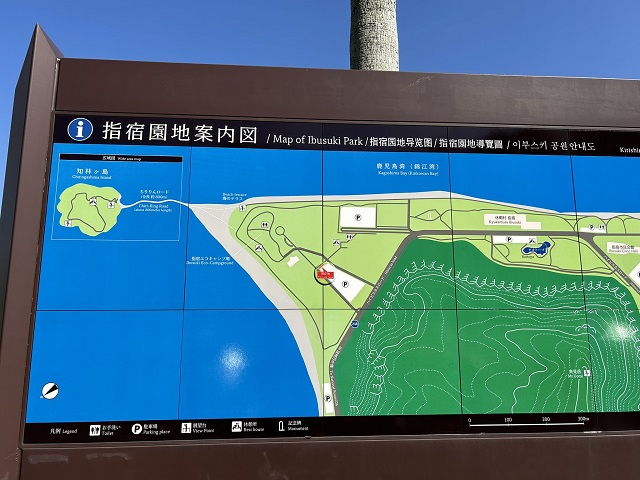
I have just one piece of advice here.
Make sure to stop by the restroom at the parking lot before crossing over to Chirin-ga-shima Island.
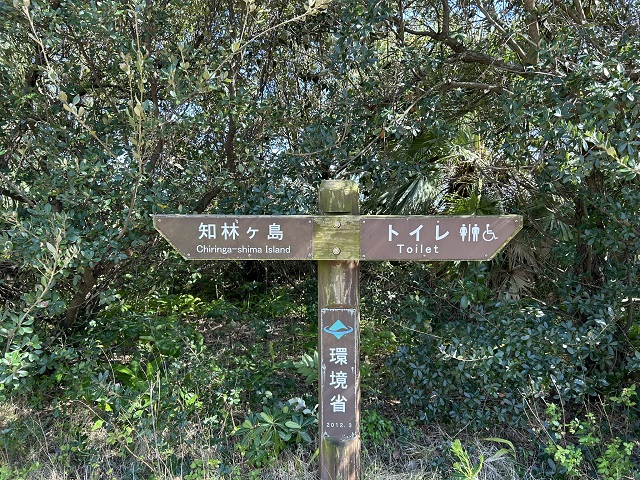
You’ll find signs like this.
This is the first place you should stop by.
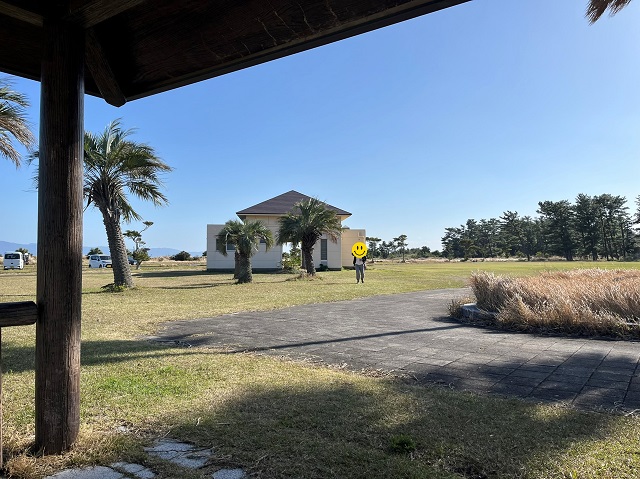
For one thing, there are absolutely no restrooms on Chirin-ga-shima Island.
Also, even though the distance is 800 meters, it involves a long walk across sand.
On top of that, there is nothing to block the wind along the way, so it can get incredibly strong.
Considering the round trip along the Chiririn Road, it is definitely worth going.
The Chiririn Road begins once you reach the shoreline.
That is Chirin-ga-shima Island over there.
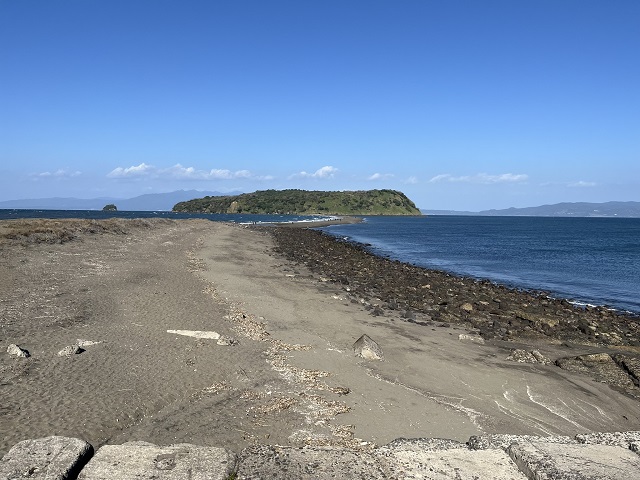
The clouds have largely cleared and the weather is nice, though the wind is quite strong.
I hear the width of this sandy path varies by season, but it was quite wide at the time we walked along it.
It is striking how differently the waves break on the right and left sides of the Chiririn Road.
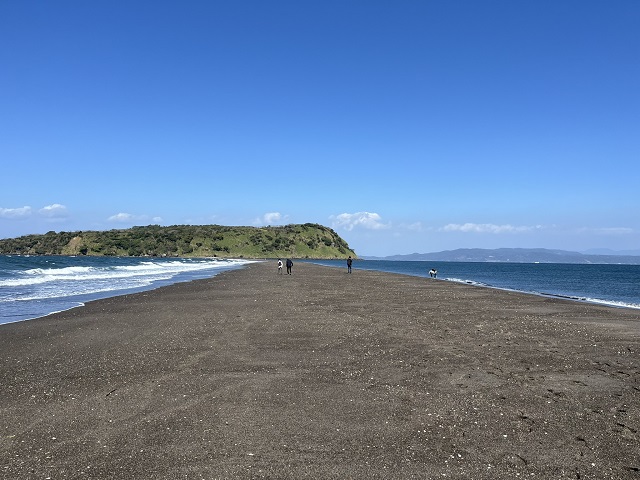
As you walk, ocean waves surge right up beside you, creating a delightful scene.
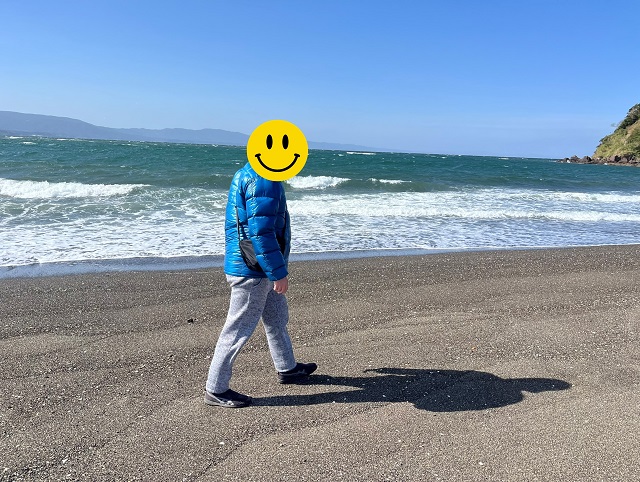
The sandy path looks firm and easy to walk on, but since you are walking on constantly damp sand, your feet sink in quite a bit, making it harder to move forward than you might expect.
It took about 30 minutes to reach Chirin-ga-shima Island.
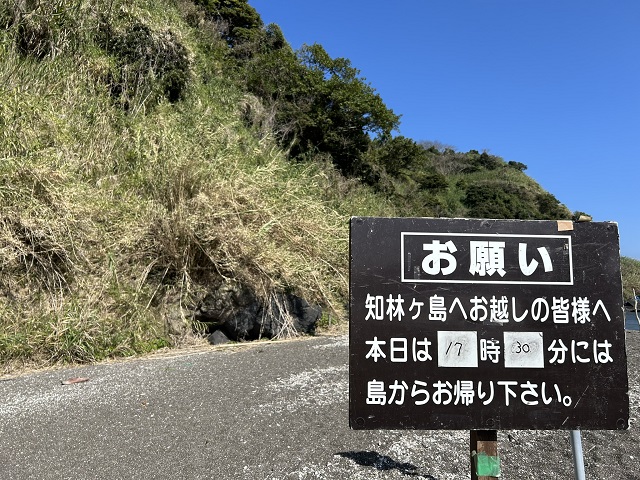
A local staff member will be waiting at Chiringa Island and will issue you an entry certificate for 100 yen.
Also, it seems that a promenade and observatory were built on Chiringa Island in 2008, and he explained the path to get to the observatory.
This is the road leading to the observation deck.
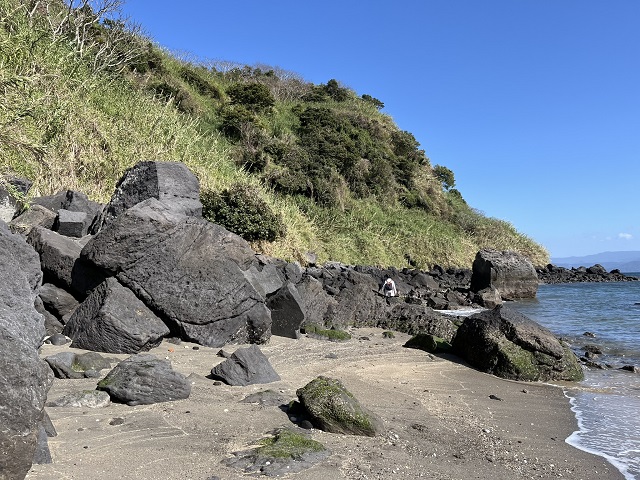
I took a short break, enjoyed the view of the Chiririn Road from Chiririn Island, and then headed back.
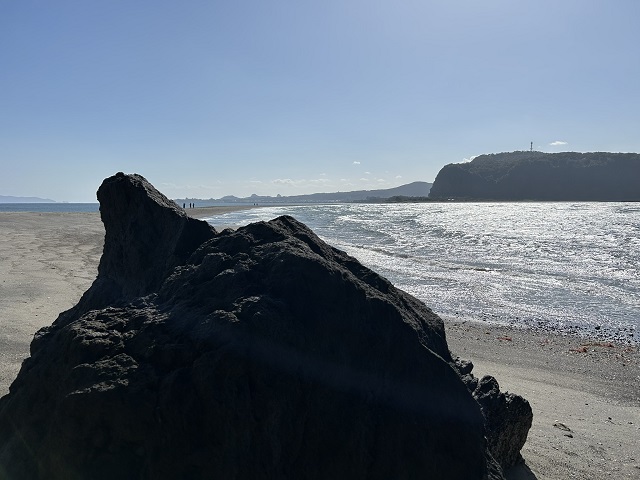
Knowing that the “Chiririn Road” is a rare, ephemeral path that only exists when a specific set of geographical and natural conditions align, it was a truly special and enjoyable experience to visit and actually walk across to Chirin-ga-shima Island.
If you ever have the chance to travel to Ibusuki, I highly recommend stopping by.
Now, for tonight, I’ll be staying at Hakusuikan, a hotel famous for its sand-steam baths!
枕崎お魚センター Makurazaki Fish Center
Address: 33-1 Matsunoo-cho, Makurazaki City, Kagoshima Prefecture
Tel:0993-73-2311
Business Hours:9:00~17:00
Makurazaki Fish Center HP:枕崎お魚センター | 自然の恵みで彩られた枕崎お魚センター (makurazaki-osakana.com)
My note: The restaurant opens at 11:00 AM, so it’s a great option if the timing works for you. The skipjack tuna (katsuo) is definitely the highlight here! If you just want a quick taste, I recommend buying some *katsuo no tataki* (seared skipjack) on the first floor to eat. They also had sashimi platters available. Although I didn’t buy any myself, the tea and dried bonito flakes looked like excellent souvenir choices. The parking lot is large, but during the busy lunch rush, you might end up having to park quite a distance away.
黄金の鳥居横のオートキャンプ場 Auto-camping site next to the golden torii gate
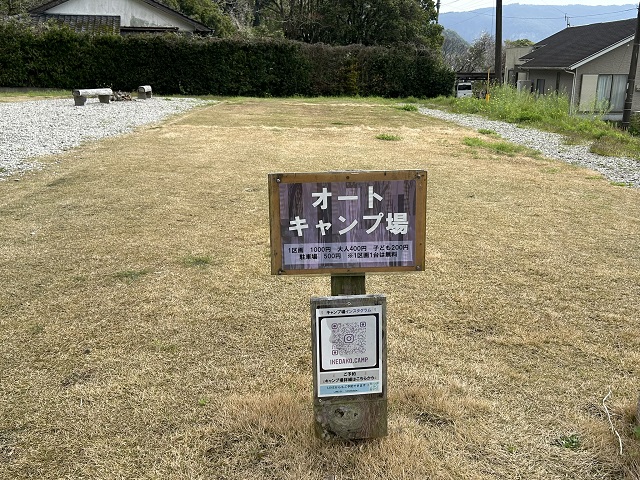
It is a well-maintained auto-camping site. The fee is 1,000 yen per pitch, plus 400 yen for adults and 200 yen for children. Apparently, reservations can be made via Instagram or LINE.
It is a quiet spot with a beautiful lake, and the café building is equipped with restrooms and vending machines.
There are also places to eat near the Issy statue, so I think it’s a bit of a hidden gem.
知林ヶ島 ちりりんロード Chiringashima Island – Chiririn Road
The Chiririn Road appears between March and October.
The times when you can cross the road vary daily depending on the tides.
There is a website available, so please check it for reference.
Ibusuki Tourism Network Homepage:https://www.ibusuki.or.jp/tourism/view/chirin/load/
The predicted times for when the Chiririn Road appears are summarized here.